The right kids program does more than burn energy, it builds habits your child can use at school, at home, and with friends.
Parents in Plainville tell us the same thing in different ways: you want an activity that’s healthy, structured, and actually sticks. Martial Arts checks those boxes, but the real win is what happens between the techniques. A good class quietly teaches kids how to listen, try again after mistakes, and handle big feelings without melting down.
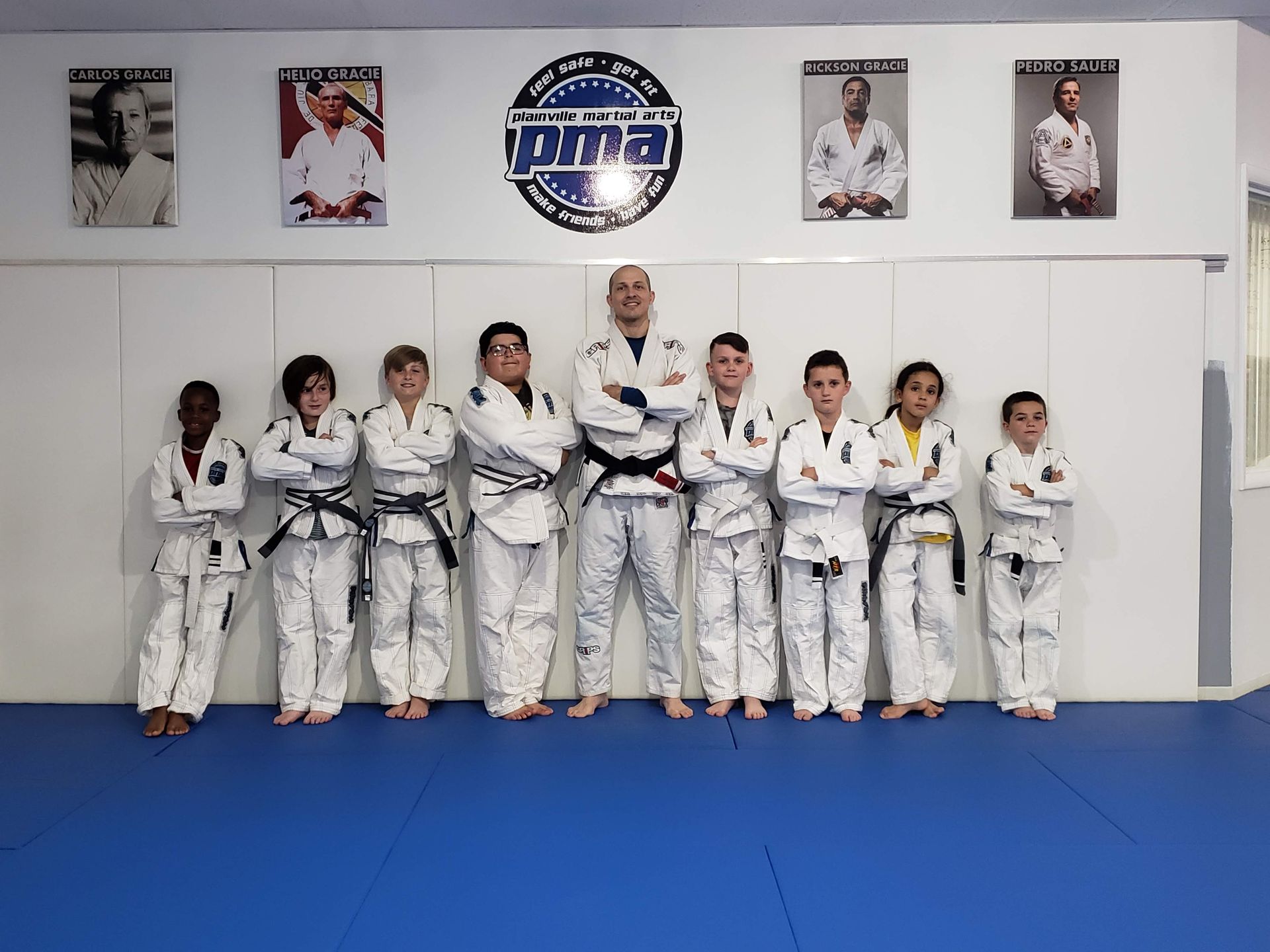
We see it especially clearly in our kids programs because progress is visible week to week. A child who struggled to focus for five minutes starts finishing drills. A shy kid starts answering loud and proud during class. And the kid who used to quit when things got hard learns to pause, breathe, and keep going.
In Plainville, families also want something practical and safe. Our approach emphasizes step by step skill-building, age-appropriate training, and a values-first culture that supports confidence and anti-bullying skills without pushing ego-driven intensity.
Why these lessons matter for kids in Plainville
Kids today deal with a lot: busy schedules, social pressure, screens that never stop buzzing, and the everyday challenges of school. It’s no surprise that many parents are looking for activities that support mental wellness as much as physical health. Nationally, youth martial arts enrollment has climbed in recent years, with many families choosing programs for focus, confidence, and resilience, not just fitness.
Locally, those needs show up in very real ways. Bullying prevention and social confidence are common concerns, and kids benefit from learning how to carry themselves with calm body language and clear boundaries. Martial Arts training helps because it creates a consistent routine: line up, listen, practice, improve. That structure becomes a pattern kids can use anywhere.
How our kids programs are built to teach life skills
We teach life lessons on purpose, not by accident. Our kids curriculum is structured so that each class has a clear beginning, middle, and end, with simple expectations that help kids feel safe and successful. We use age-specific coaching, so kids aren’t asked to “act older” than they are.
Lil Ninja ages 4 to 7: channeling energy into skills
This is where we take big energy and turn it into progress. We focus on listening, following directions, balance, coordination, and basic teamwork. The pace stays fun, but the standards stay consistent, which is exactly what many young kids need.
Juniors ages 8 to 12: discipline, leadership, and real confidence
As kids grow, we build stronger problem-solving skills and introduce more technical training, including self-defense awareness and anti-bullying concepts. Juniors learn how to work with partners, handle feedback, and stay composed under pressure.
We also offer family-friendly scheduling because Plainville families are busy, and consistency is what creates results.
Lesson 1: Focus that shows up in school and at home
Focus is not something most kids can simply “decide” to have. It’s trained. In class, we ask kids to pay attention in short bursts, then slightly longer bursts, until concentrating becomes normal instead of exhausting.
A typical class naturally reinforces focus in a few ways:
- Clear start and stop cues help kids practice switching attention on purpose
- Drills require listening for details, like foot placement and timing
- Kids learn that rushing usually creates mistakes, and slowing down fixes them
- Progress is tied to effort and attention, not random talent
Over time, many parents notice their child can sit with homework longer, follow multi-step directions with less pushback, and recover faster after distractions. That is a real-life skill, not just a “dojo thing.”
Lesson 2: Confidence that is earned, not handed out
Kids can spot fake praise from a mile away. Confidence grows best when it’s based on something tangible: “I did the work, and I can prove it.” Martial Arts gives kids frequent chances to experience small wins that stack up.
Confidence is built through:
- Repetition that turns awkward movements into familiar skills
- Safe partner drills that teach kids to stay calm around others
- Goal milestones that reward consistency over perfection
- Coaches who correct kindly but clearly, so kids learn without feeling judged
This matters for bullying prevention, too. Confidence changes posture, eye contact, and voice. Kids who feel capable often look less like easy targets, and they’re more likely to speak up early instead of waiting until a situation gets worse.
Lesson 3: Determination and grit through the belt journey
Determination is a muscle. It gets stronger every time your child wants to quit but chooses to keep going anyway. Belt progression helps because it’s not instant. Kids learn that improvement is a process, and that showing up counts.
We teach determination by keeping expectations steady:
1. Show up consistently, even when you feel off
2. Practice fundamentals until you can do them on your “bad days”
3. Accept corrections without taking them personally
4. Try again right away, not next week
5. Celebrate progress, then set the next goal
That sequence is simple, but it’s powerful. It teaches kids how to work, not just how to win. And because the environment is supportive, kids learn to push themselves without feeling alone.
Lesson 4: Social skills that feel natural, not forced
A lot of kids struggle socially for different reasons. Some are shy. Some are loud and impulsive. Some are in the middle but unsure how to join a group. In Martial Arts class, social practice happens in a structured way, which is often easier than unstructured playground time.
We build social skills through partner work and team routines:
- Kids practice taking turns, sharing space, and using respectful language
- Partner drills teach communication without needing long conversations
- Kids learn how to handle small conflicts, like mismatched pace or mistakes
- Group expectations reduce awkwardness because everyone follows the same rules
- Older or more experienced students model calm behavior and cooperation
Over time, many kids become more coachable at school and more flexible with peers. That’s not magic. It’s repetition in a setting where social success is taught, not assumed.
Lesson 5: Respect as a daily habit, not a lecture
Respect is one of those words adults say a lot, but kids understand it best when it’s visible. We teach respect through routines: how you enter the training space, how you speak to instructors, how you treat training partners, and how you respond when you’re frustrated.
Respect in class looks like:
- Listening the first time, even when you don’t love the instruction
- Using self-control with your hands and voice
- Helping partners improve instead of trying to “beat” them
- Owning mistakes without blaming others
- Treating everyone as worth your attention, including beginners
This is also where Martial Arts can be surprisingly calming. When kids learn respectful self-control, they often feel more in control of themselves, which reduces outbursts and power struggles at home.
Safety, self-defense, and the role of Brazilian Jiu-Jitsu
Parents often ask two questions right away: “Is it safe?” and “Does it teach real self-defense?” Our answer is yes to both, because we teach in a way that fits a child’s age and experience level.
Brazilian Jiu-Jitsu is especially valuable for kids because it emphasizes leverage, positioning, and problem-solving. It’s less about size and more about technique and awareness. We keep training structured and beginner-friendly, with close supervision and clear rules. Kids learn how to move their bodies, protect personal space, and respond with control.
When we talk about self-defense for kids, we also mean the non-physical parts:
- Recognizing unsafe behavior early
- Using a strong voice and confident posture
- Creating space and getting help fast
- Practicing boundaries in a calm, consistent way
Those skills matter in real life, and we treat them with the seriousness they deserve.
How Martial Arts supports the whole family in Plainville
Kids training often sparks something bigger: healthier routines for the whole household. When your child has a class they enjoy, evenings can feel more organized. Meals, homework, and bedtime sometimes fall into place a bit more easily because there’s a predictable rhythm.
We also welcome families who want to train together. If you’ve been searching for adult martial arts in Plainville, training alongside your child can be a surprisingly meaningful way to stay active and connected. It’s not about being perfect. It’s about sharing a challenge and learning together, one class at a time.
And yes, adults benefit from the same core lessons: focus, confidence, determination, social connection, and respect. The delivery is just age-appropriate.
Take the Next Step
If you’re looking for martial arts in Plainville that teaches more than kicks and drills, our team at Plainville Martial Arts built our kids programs around life skills that show up where you actually need them: school mornings, friendships, sports teams, and family routines. The five lessons above are not “extras” for us, they’re part of the training.
Whether your child is four and full of bounce, or twelve and ready for bigger goals, we’ll help you find the right fit and a class schedule that makes consistency realistic. When you’re ready, we’d love to welcome you in and let you see how the environment feels in person.
Build stronger skills and improve your technique by joining a martial arts class at Plainville Martial Arts.
