The best training changes how you move, but it also changes how you think under pressure.
Screen time is up, schedules are packed, and it is getting harder for kids and adults to stay locked in on one thing at a time. That is a big reason so many Plainville families come looking for martial arts training that does more than burn energy. Our goal is simple: help you build focus you can feel in class and resilience you can use everywhere else.
In our programs, focus is not a motivational poster idea. It is a skill you practice. You learn to pay attention to details like stance, breathing, timing, and distance, and you repeat those skills until they become natural. Resilience works the same way. You meet a challenge, you adjust, you try again, and you leave with a quiet kind of confidence that tends to show up later at school, at work, or at home.
Martial arts in Plainville is not just about learning techniques. For many students, it becomes a weekly reset button: a place to work hard, be coached, and finish class feeling more capable than when you walked in.
Why focus is a trainable skill, not a personality trait
A lot of people assume focus is something you either have or you do not. We see the opposite every day. Attention improves when you practice paying attention in a structured way, with immediate feedback and a clear goal in front of you.
Training gives you a clean target for your mind. When you are working on a combination, you cannot scroll, multitask, or drift off. You have to notice what your feet are doing, where your hands are, and how your partner is moving. Over time, that repeated demand for present-moment awareness becomes easier to access outside the dojo too.
Researchers have been tracking this, and the trend is consistent: martial arts practice is associated with measurable gains in attention and self-control in youth after months of training. We also see that it works best when the training is progressive and consistent, not random or sporadic.
The hidden focus builder: repetition with purpose
Repetition is not glamorous, but it is powerful. A drill done correctly, then corrected, then repeated, is basically concentration training in a uniform.
In class, we keep students engaged by giving them one main objective at a time. Instead of trying to fix everything at once, we narrow the focus. Maybe today you are working on chambering a kick, or keeping your guard up, or moving your head off the centerline. That single target lowers mental clutter, which is often the real enemy of focus.
And yes, the small wins matter. When you feel yourself improving, you naturally want to pay more attention. Progress is sticky like that.
How resilience is built through safe, controlled challenge
Resilience is not about being tough all the time. It is about recovering quickly and responding well when something is hard. Martial arts is one of the few activities where you can practice that skill on purpose, in a safe environment, with rules and coaching.
Training introduces controlled stress: your heart rate rises, you make quick decisions, you get something wrong, you feel the urge to quit, and then you keep going anyway. That cycle teaches your nervous system that discomfort is not danger. It is information. Once you learn that, a lot of everyday problems start to feel more manageable.
Goal-setting plays a big role here. In combat sports psychology, setting clear goals and working steadily toward them is strongly tied to resilience and confidence. We build that into how we teach, so you are not guessing what to do next or wondering if you are falling behind.
What resilience looks like in real life
Resilience shows up in small moments first. A student who used to shut down after a mistake learns to reset and try again. A teen who gets frustrated easily starts breathing, listening, and finishing the round. An adult who feels stressed all week finds that class is the one place where the mind finally stops spinning.
It is not magic. It is practice.
What you actually do in class to build focus and resilience
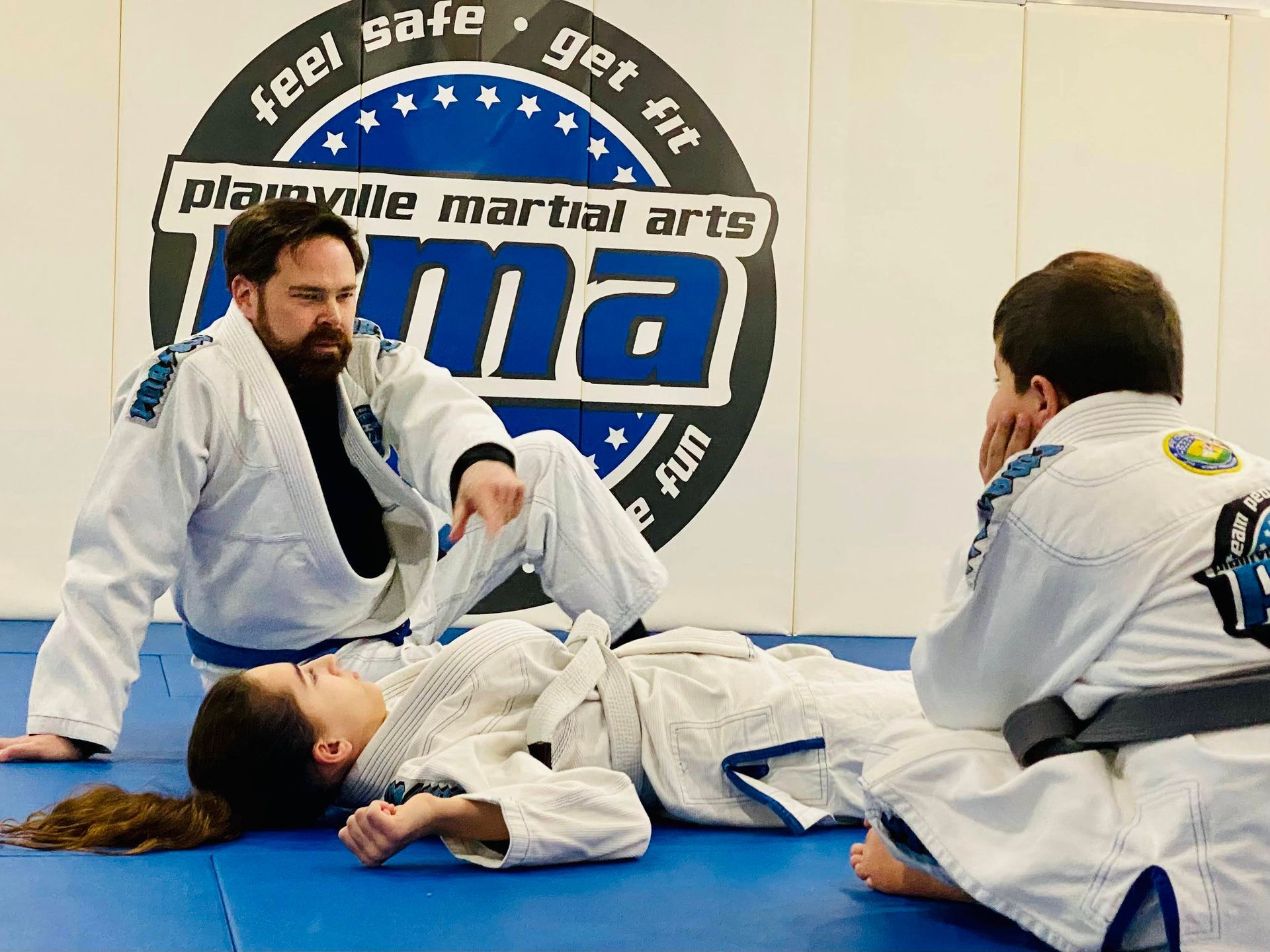
People sometimes picture martial arts as nonstop sparring or intense workouts from day one. Our classes are structured, coached, and designed for real progress. You will sweat, but you will also think.
A typical class blends technical instruction, partner work, and conditioning in a way that keeps you engaged without overwhelming you. We want students to leave class feeling challenged and successful, not crushed.
Here are a few training elements we rely on because they build both mental and physical skills at the same time:
• Fundamentals and form work that teach body control, timing, and patience when progress is slow
• Technique drills that require attention to detail, especially when fatigue makes you want to rush
• Partner drills that improve calm decision-making and respectful communication under pressure
• Controlled sparring or situational practice where you learn to stay composed and adapt
• Cooldowns and short reflections that help you connect what happened in training to everyday life
That mix matters. Focus grows when you have to concentrate, and resilience grows when you have to concentrate while tired.
Kids programs: focus you can measure at school and at home
For kids, the biggest wins are often simple: following directions the first time, finishing a task, and handling frustration without melting down. We love seeing physical skills develop, but we pay just as much attention to the behaviors that show a child is maturing.
We work with kids as young as four, and we teach in a way that matches their attention span. Younger students need clear structure and frequent feedback. Older kids and teens can handle longer drills and more complex combinations, but they still benefit from coaching that is direct and encouraging.
In Plainville, families are dealing with the same thing families everywhere are dealing with: distractions everywhere. When kids train consistently, many parents notice better routines at home. Homework gets done with less argument. Mornings run smoother. Bedtime is still bedtime, but it feels less like a negotiation.
Anti-bullying and confidence, without turning kids into aggressors
A common concern is whether martial arts makes kids more likely to fight. Our approach is the opposite. We teach discipline, boundaries, and respect. Students learn that skill comes with responsibility.
Confidence is one of the best anti-bullying tools there is, because confident kids stand differently, speak differently, and make better choices. We also teach practical awareness and how to handle conflict without escalating it. That is resilience too: staying steady instead of reacting impulsively.
Teen training: resilience during a high-pressure stage of life
Teenagers deal with academic pressure, social pressure, and a lot of self-judgment. Martial arts gives teens a place to work hard, get coached, and improve in a way that is tangible. You either hit the target cleanly or you do not, and either way you can fix it. That kind of feedback is weirdly calming.
We also like that training gives teens a healthy way to manage stress. Instead of holding everything in, you move. You breathe. You learn to stay composed when a round gets intense. Those habits carry over to tests, sports, and difficult conversations.
For teens who struggle with attention, consistent training can be especially helpful because it is structured and active. You are not asked to sit still for an hour. You are asked to focus while moving, which is often a better fit.
Adult classes: focus for work, resilience for real life
Adults often come in for fitness or self-defense, but many stay because training improves how you handle stress. A good class demands your full attention. For 45 to 60 minutes, you are not thinking about email, bills, or the never-ending to-do list. You are present.
That presence is restorative. It is also practical. Adults learn skills, conditioning, and composure at the same time. And for plenty of people, resilience is not about winning anything. It is about showing up consistently after a long day and proving to yourself you can still do hard things.
A note on safety and injury concerns
It is normal to worry about injuries, especially if you have not trained before. We take safety seriously. Training is progressive, technique-focused, and supervised. Partner drills are structured, and contact levels are controlled. Industry data often puts martial arts injury rates relatively low, roughly in the 1 to 2 percent range in many organized programs, and we aim to keep training smart so you can stay consistent.
Consistency beats intensity. Every time.
How membership and scheduling typically work for Plainville families
If you are trying to fit training into a busy life, you are not alone. Most families want a predictable routine: a couple evenings a week, maybe a weekend option, and a plan that does not feel chaotic.
Pricing for martial arts programs in our area commonly lands around 100 to 150 per month depending on program and training frequency, and we structure options so you can choose a path that makes sense for your goals. Some students love training two days a week. Some want more. The best plan is the one you can maintain without burning out.
If you want specifics, the class schedule page on the website is the easiest way to see what times are available and which classes match age and experience.
A simple way to track progress without overthinking it
Progress can feel invisible week to week, especially in the beginning. One thing we recommend is keeping a small training journal. Nothing fancy. Just quick notes.
Try this approach for four weeks:
1. Write one focus goal before class, like keep my guard up or listen for corrections
2. After class, write one thing you improved and one thing you will practice next time
3. At home, practice that one thing for five minutes, two days that week
4. At the end of week four, review your notes and pick one new goal
This is where martial arts becomes a life skill. You learn how to improve on purpose.
Experience Martialville Martial Arts in Plainville, CT and build skills that last
If you want more focus, more resilience, and a training routine that supports your whole life, we built our programs for that. The best part is that you do not have to arrive confident or coordinated. You just have to start, and keep showing up long enough for the skills to stick.
At Plainville Martial Arts, we guide you through structured training that helps you stay engaged, handle challenges better, and feel proud of steady progress. When you are ready, we would love to meet you and help you take the first step.
Train with experienced instructors in a supportive environment at Plainville Martial Arts.
