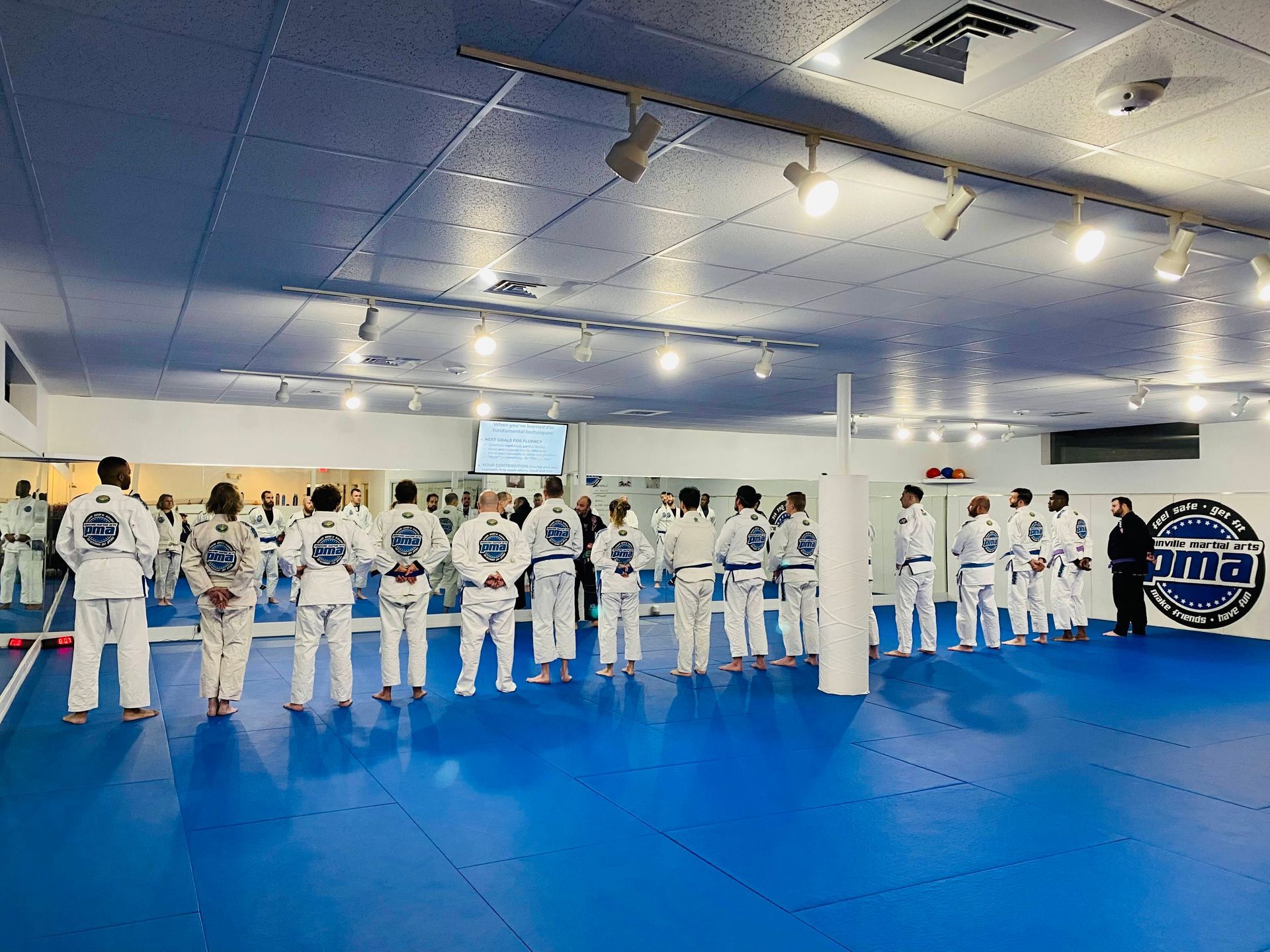
Martial Arts gives you a place to train your body, sharpen your mind, and measure real progress week by week.
Martial Arts has a funny way of showing you what you are capable of, often faster than you expect. You come in thinking you will “just get in shape” or “learn a little self-defense,” and then you notice you are standing taller, breathing better, and handling stress with a calmer edge. That blend of physical change and personal growth is why so many people stick with training once it clicks.
Here in Plainville, our community has the same needs we see everywhere, just in a more down to earth, everyday way: kids need structure and confidence, adults need a workout that does not feel like a chore, and families want something they can build into a routine. We design our programs to meet those real lives and real schedules.
Nationwide, more than 18 million Americans participate in martial arts each year, and studios are growing because people want more than treadmills and apps. They want coaching, accountability, and a community that notices when you improve. We see that same momentum locally, and we keep our focus simple: consistent training that helps you grow on and off the mat.
Why Martial Arts personal growth feels different than typical fitness
A lot of fitness plans depend on motivation, and motivation is unreliable. Training works because it is structured. Our classes give you a plan, a coach, and a clear way to build skills in layers, so you are not guessing what to do next.
Martial Arts also gives you feedback you can feel. Balance is either there or it is not. Your guard is either protecting you or leaving a gap. Your breathing either supports you under pressure or it does not. That honesty can be humbling, but it is also what makes improvement so satisfying.
And then there is the mental side: learning how to try, fail safely, and try again without spiraling. That is a life skill. The mat becomes a small training ground for patience, humility, and follow-through, which is exactly what many adults and kids struggle to practice in the rest of the week.
The physical benefits you can expect over time
People often ask whether martial arts is “good cardio” or “good for strength.” The truth is it is a full-body training system when it is taught progressively and practiced consistently. Research and real-world results both point in the same direction: training can improve flexibility, posture, bone density, muscular strength, cardiovascular function, balance, and stamina across ages, including older adults and people with disabilities.
In our classes, conditioning is not just random intensity. We use purposeful drills so you develop:
- Better movement patterns that support your joints
- Practical strength in hips, core, and upper body
- Coordination and timing, not just effort
- Endurance that carries over to daily life, like stairs, yardwork, and long workdays
If you train 2 to 3 times per week, many students notice early wins in 4 to 8 weeks: breathing improves, energy levels lift, and movements feel less awkward. The longer-term benefits build quietly, and then one day you realize you are not “getting tired as easily” anymore.
Confidence, focus, and emotional control: the hidden curriculum
Self-defense matters, but personal growth is not only about learning what to do in a worst-case scenario. It is also about building self-control in everyday moments. Martial arts training is linked with reduced aggression and improved emotional well-being, especially when the culture is respectful and goal-oriented. That is exactly how we run the room.
For kids, that often looks like better listening, improved follow-through, and more confidence speaking up appropriately. For adults, it usually shows up as a calmer response to pressure. You learn how to be uncomfortable without panicking, which is a skill you can use in meetings, parenting, and tough conversations.
We also lean on milestones, because humans need them. Belt promotions and skill benchmarks are not about collecting colors. They are a concrete way to mark effort, resilience, and progress. That sense of “I earned this” can do a lot for confidence, especially for someone who has not felt good at something in a while.
Martial arts in Plainville: why it fits suburban life in Hartford County
Plainville is busy in a particular way. It is not big-city chaotic, but schedules fill up fast: school events, commute patterns, family obligations, and the usual “how is it already Thursday?” feeling. Training has to fit real lives, not ideal ones.
That is why we build our class schedule to support consistency. You should be able to train before work, after school, or in the evening without it taking over your entire week. Most students do well with 1 to 2 hour-long sessions weekly at first, then add more once the habit is established.
We also see what the broader industry sees: a strong youth base (often 40 to 50 percent of participants are ages 5 to 17) and a growing group of adults who want stress relief, fitness, and practical skills. Women also continue to grow in participation, and we take that seriously by keeping training respectful, technical, and confidence-building rather than “tough for tough’s sake.”
Programs that meet you where you are
Not everyone walks in with the same goals, and we do not pretend otherwise. Some people want a demanding workout. Some want practical self-defense. Some want their child to have better focus and discipline. Some are returning to fitness after a long break and want a safe way to rebuild.
Our programs are structured so you can start as a true beginner and still feel supported. We teach fundamentals first, then layer complexity only when the basics are stable. That approach keeps training safer, more enjoyable, and more effective.
Youth training: structure, respect, and momentum
Youth classes are about more than burning off energy. We use clear expectations, repeatable routines, and positive correction so kids learn how to:
- Follow directions the first time
- Stay focused even when something feels challenging
- Work with partners respectfully
- Handle small frustrations without quitting
Parents often tell us the biggest change is not physical. It is behavioral: kids become more confident, more patient, and more willing to practice. That is the kind of growth that shows up at school and at home.
Adult training: fitness, stress relief, and real skills
When people search for adult martial arts in Plainville, they usually want one of two things: a workout that feels purposeful, or training that makes them feel safer. Our adult program is built for both. You train your whole body, but you also learn why techniques work and how to apply them with control.
A typical adult journey looks like this: the first few classes feel new and a little clumsy, then the basics start to click, then conditioning improves, and then confidence quietly follows. You do not have to be “athletic” to begin. You just have to show up consistently and let the process work.
Family training: shared goals without forcing it
Families like training because it gives everyone a shared language for growth: effort, respect, practice, and persistence. It is also one of the few activities where progress is personal. Your child is not “behind” someone else. You are not “too old” to start. Everyone is simply working on their next step.
We keep family participation flexible so you can train together when it makes sense and separately when schedules demand it. That matters in Plainville, where one family calendar can feel like three calendars taped together.
Adaptive options: training should be for more people, not fewer
Martial arts can be adapted for many bodies and needs. Research shows meaningful benefits even for older adults and individuals with disabilities, especially around balance, mobility, posture, and confidence. We take an individual-first approach, adjusting drills, pace, and intensity so you can train safely while still feeling challenged.
If you are unsure whether training can work for you, the best next step is a conversation plus a low-pressure intro class. Once we see how you move, we can make smart adjustments.
What you actually do in a beginner class
Beginner-friendly does not mean watered down. It means organized. Our goal is to help you learn quickly without feeling thrown into the deep end. Most classes include a mix of warm-ups, technique practice, partner drills, and conditioning that matches your level.
Here is what you can expect to build in the first phase:
- Stance, footwork, and balance so you feel stable and mobile
- Basic strikes and defensive movements with attention to safety and control
- Timing and distance, because power without accuracy is not useful
- Partner drills that build confidence without unnecessary risk
- A clear path for advancement so you always know what to practice next
You do not need fancy gear on day one. Comfortable workout clothes, an open mind, and a willingness to learn are enough to start.
Progress you can measure: belts, milestones, and real-world carryover
Progress matters, especially when life is stressful and you want proof your effort is paying off. Belt systems and skill milestones give you that proof. They also build a healthy relationship with practice: you learn to focus on the next step, not the distant finish line.
We also encourage students to notice “carryover wins,” the kind that show up outside the gym:
- You recover faster after physical effort
- You feel less tense driving or dealing with crowds
- You speak up more clearly at work
- You set better boundaries, because confidence makes that easier
- You handle mistakes with less self-criticism
Those are not flashy outcomes, but they are the ones that tend to stick.
Time and cost: planning for consistency in 2025
Most people do not quit because training does not work. People quit because training does not fit their life. We plan around that reality. A realistic starting point is 2 classes per week, then adjust based on goals and recovery.
Cost is another real factor. Across the U.S., the average student spends around $150 per month, and economic pressure can make discretionary spending feel tight. We approach membership with a value mindset: clear coaching, structured progression, and a schedule that supports consistency. If you want results, the best plan is not the most extreme plan. It is the plan you can sustain.
How to start without overthinking it
Getting started should feel simple, because the hard part is the training itself. If you are brand new to martial arts in Plainville, we recommend a straightforward approach:
1. Look over the class schedule on the website so you can choose times you can realistically keep
2. Try an intro class so you can feel the pace, coaching style, and class culture
3. Pick a weekly routine you can maintain for at least 8 weeks
4. Track a few simple wins like attendance, improved stamina, and technique comfort
5. Adjust your goals once the basics feel familiar and your confidence rises
That is it. No dramatic reinvention needed, just consistent practice.
Ready to Begin
The strongest growth comes from doing the basics well, repeatedly, with coaching that keeps you safe and progressing. That is the environment we build at Plainville Martial Arts: structured training, supportive culture, and a clear path for kids, adults, and families who want real change they can measure.
If you are looking for Martial Arts that fits Plainville life, we would love to help you start in a way that feels doable and rewarding, whether your goal is confidence, fitness, self-defense, or simply a healthier routine.
Develop real fundamentals and advance your training by joining a martial arts class at Plainville Martial Arts.
