Real focus is a trained skill, and the dojo is one of the best places to practice it.
Focus and emotional balance are easy to talk about and harder to live, especially when your day is packed and your attention gets pulled in ten directions. In our Martial Arts classes, we treat focus like a skill you can build on purpose, not a personality trait you either have or you do not. That shift matters, because training gives you a repeatable way to practice attention, patience, and self-control.
We also see that emotional balance improves most when it is paired with structure. You show up, you follow a process, you work hard, and you learn how to respond instead of react. Over time, that becomes a habit you can take with you into school, work, relationships, and the little stresses that add up.
In Plainville, routines matter. Commutes, school schedules, sports, family obligations, and seasonal busyness can make it tough to protect your mental space. The good news is that training is one of the few places where your job is simple: be present, listen, move, and improve one rep at a time.
Why Martial Arts sharpens focus faster than most activities
Most hobbies let your mind wander. Training does the opposite. When you practice techniques, your attention is constantly being called back to your stance, your breathing, your timing, and your distance. This is one of the reasons Martial Arts is often described as a practical form of mindfulness, without requiring you to sit still and hope your brain cooperates.
Repetition plays a huge role here. Repeating a technique does not just build muscle memory, it builds mental endurance. Your brain learns how to stay with one task long enough to make it better. That is patience, but it is also focus under mild pressure, which is what daily life asks from you all the time.
Another reason focus improves is that training gives you immediate feedback. If your guard drops, you feel it. If your footwork is off, your balance tells on you right away. That real-time correction loop keeps your attention engaged in a way that reading tips about productivity usually cannot.
Present-moment attention during drills and sparring
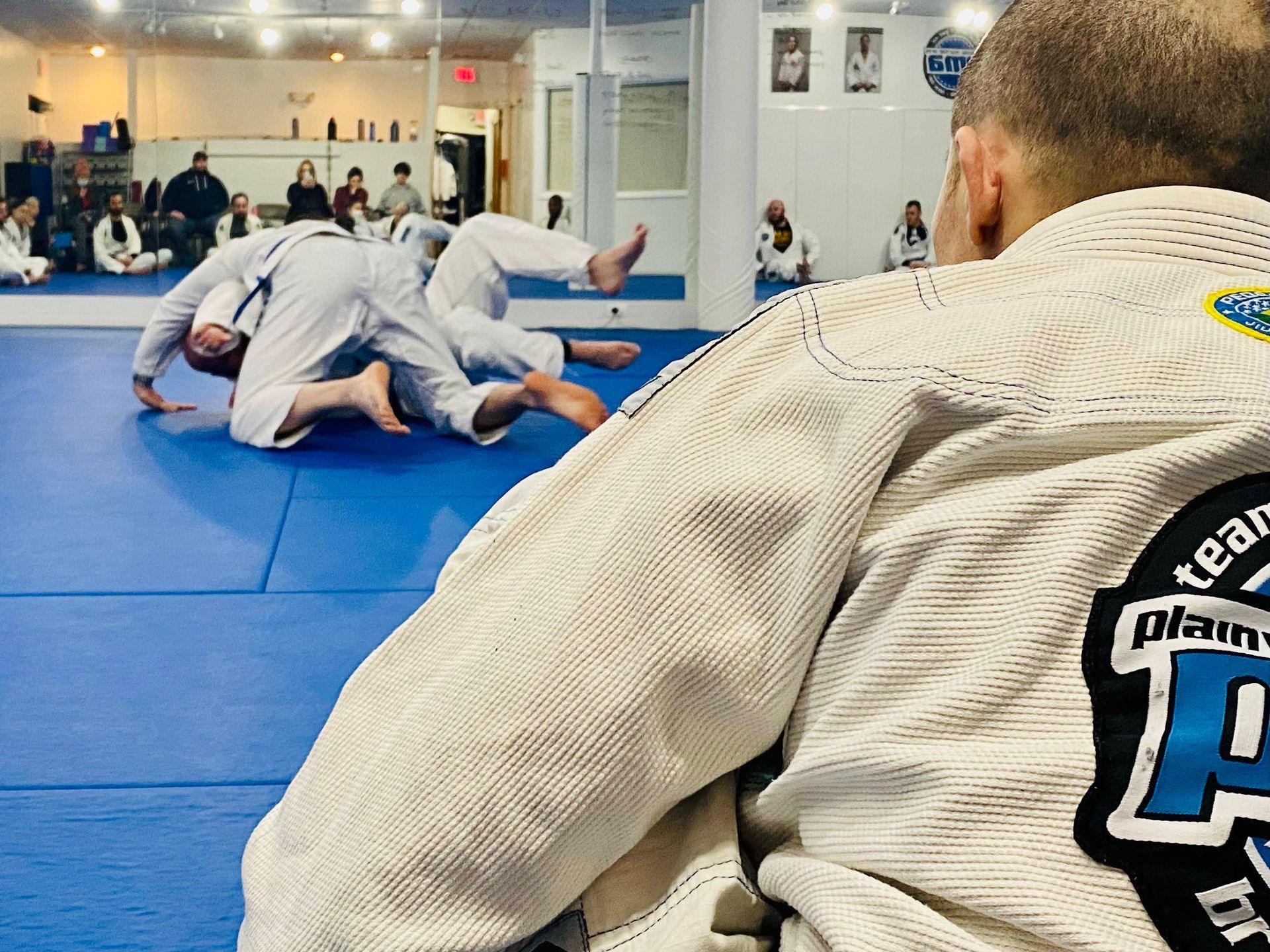
When we run partner drills, you cannot drift mentally and still do well. Your partner is moving, the target changes, and you have to read distance and timing in real time. That cognitive demand trains sustained attention, and it also improves reaction time because you are learning to notice details earlier.
Sparring, when used appropriately for your level, is especially powerful for attention control. You learn to focus on what is happening now instead of replaying what just happened. That is a life skill: after a mistake at work or an argument at home, it helps to reset quickly and respond with intention.
Visualization and “quiet thinking” improves decision-making
We build short moments of visualization into practice because it reinforces learning and keeps your mind organized. Seeing a movement, feeling the rhythm, and then executing it helps your brain create cleaner pathways. Over time, that translates into better daily decision-making because you get used to pausing, reading the situation, and choosing a response.
This is also where many people notice improved memory and attention outside the dojo. You remember sequences, you track cues, and you learn to focus even when you are tired. That kind of mental training tends to show up later in places like studying, meetings, and even conversations.
How training supports emotional balance without “stuffing feelings down”
Emotional balance does not mean you never feel stressed or frustrated. It means you can feel those things and still act with control. Martial Arts training creates a structured environment to practice that, because it naturally includes challenge, discomfort, correction, and progress. You get plenty of chances to manage emotions in small doses, which is exactly how you build regulation.
A big piece is discipline. Not harsh discipline, just the steady kind: showing up, practicing fundamentals, listening, trying again. That rhythm makes you more consistent, and consistency tends to calm the nervous system. When your brain knows what is coming next, it can relax a little.
We also emphasize respect and composure. You learn to treat training partners well, handle feedback without defensiveness, and stay calm enough to keep learning. That skill matters everywhere, not just in a uniform.
Breathing and composure under pressure
Controlled breathing is simple, but it works. When your heart rate rises in drills, you practice breathing in a way that keeps you steady. That practice carries into daily stress, because your body recognizes the pattern. Instead of spiraling, you have a tool you have already used hundreds of times.
Breathing also helps with emotional timing. Many people react quickly when frustrated, then regret it later. Training gives you space to slow down by one beat. That tiny pause can be the difference between snapping and communicating clearly.
Forms and repetitive movement as a mental reset
Repetitive movement has a meditative quality, especially in forms and structured combinations. You are moving, counting, aligning posture, and staying present. That combination often produces a calm, clear feeling afterward. It is not magic, it is your nervous system responding to steady effort and predictable rhythm.
This is one reason people describe training as a constructive outlet. You can bring stress into class, work hard, and walk out feeling lighter and more organized. The body is tired, but the mind often feels cleaner.
Stress and anxiety reduction: why the body matters for the mind
There is a straightforward physiological reason training helps: exercise supports mood. Physical effort releases endorphins and helps regulate stress hormones. Research on structured exercise shows meaningful reductions in stress, anxiety, and depression symptoms, and disciplined activities like Martial Arts often do especially well because the structure keeps you consistent.
Consistency is the real win. One hard workout is nice, but a steady schedule changes how you handle pressure long-term. Training becomes a place where you practice effort, recovery, and resilience in a controlled setting. That makes the rest of your week feel more manageable.
We also keep safety and progression front and center. When you feel safe, you can push yourself without panic. When you see improvement, you gain confidence. Confidence, in turn, reduces baseline anxiety because you trust your ability to handle challenges.
The “resilience loop” we build in class
Resilience is built through repeated cycles: try, struggle, adjust, succeed, repeat. That cycle happens constantly in training. You attempt a technique, it does not work, you get coaching, you try again, and eventually it clicks. That teaches perseverance in a very practical way.
You also learn that discomfort is not the same as danger. Being out of breath, making mistakes, or getting corrected can feel uncomfortable, but it is safe and useful. Learning to stay calm in that space is a huge part of emotional balance.
Here is what that resilience loop looks like in a typical training month:
1. You learn a new skill and feel a little awkward at first.
2. You repeat it enough times to understand the key details.
3. You pressure-test it with timing, movement, or partner work.
4. You notice what breaks and make small corrections.
5. You gain confidence because progress is visible, not theoretical.
That pattern is one of the most transferable skills we teach. It applies to schoolwork, work projects, fitness goals, and tough conversations.
Community support and belonging in martial arts in Plainville
Progress is personal, but you do not have to do it alone. A supportive training environment reduces stress because you feel seen and encouraged, not judged. When you share effort with other people, it is easier to stay consistent, and consistency is what creates real change.
Training partners also help you practice social confidence. You communicate, take turns, give respectful feedback, and learn to manage nerves. That matters for kids, teens, and adults, because social stress is real, and it does not always go away on its own.
For many families looking for martial arts in Plainville, community is a big part of why they stay. You build routine, meet people, and feel part of something healthy. That sense of belonging supports emotional well-being in a way that purely solo workouts often miss.
What you can expect from our programs and membership options
We keep our programs structured and progressive, because that is what builds focus and emotional balance safely. You start with fundamentals, and we add complexity as your skills grow. That approach helps you feel successful early, while still giving you plenty to work toward.
We also design training to meet different needs. Some students want a stronger attention span for school or work. Some want better stress management. Some want confidence and self-defense skills. Those goals can overlap, and we help you connect your training to what matters in your daily life.
Our membership options are built around consistency. Regular attendance is where the benefits show up, so we encourage a routine that fits your schedule. The class schedule page on the website is the easiest way to see what times are available and choose a rhythm you can maintain.
Skills that directly improve focus and emotional regulation
When you train with intention, you practice specific skills that transfer into everyday life:
• Attention control by staying on-task through multi-step drills and coached corrections
• Emotional regulation by breathing through pressure and resetting quickly after mistakes
• Stress relief through structured physical exertion and endorphin release
• Confidence building through progressive mastery and measurable improvement
• Communication skills through partner work, respectful boundaries, and clear feedback
Those outcomes are not random. They come from doing the work, in a system that is designed to make progress predictable.
Turning dojo focus into everyday focus
A common question is whether training “sticks” outside class. Our experience is yes, if you train consistently and notice the connection. Focus is not a switch you flip, it is a habit you rehearse. The dojo gives you a place to rehearse it on purpose.
One practical tip is to treat daily tasks like drills. Choose one thing, set a small time window, and stay with it. That mirrors how you practice combinations: you do not do everything at once, you do one sequence well. Over time, your attention becomes steadier because you have proof you can control it.
Emotional balance works the same way. When you feel stressed, use the same breathing rhythm you use in class. When you feel frustrated, practice the reset you learned in sparring: acknowledge, adjust, move forward. It sounds simple, but it is effective because you have practiced it physically, not just thought about it.
Take the Next Step
If you want a training routine that builds real-life focus and steadier emotional balance, we make that process clear and sustainable at Plainville Martial Arts. Our classes combine structured skill-building, mindful effort, and a supportive environment so you can improve attention, resilience, and confidence in a way that carries into the rest of your week.
When you are ready, we will help you choose a program and a schedule that fits your goals, whether you are looking for better concentration at school, calmer stress responses at work, or a healthier outlet that feels constructive and grounded. Plainville Martial Arts is here to guide you step by step.
Strengthen both your body and mind through consistent training by joining a martial arts class at Plainville Martial Arts.
