The fastest way to feel more capable is to practice doing hard things well, one class at a time.
If you have ever watched someone walk out of a class standing a little taller than when your class started, you know confidence is not just a personality trait. It is a skill. In martial arts training, we build that skill through clear goals, steady coaching, and repetition that turns nervous energy into something useful.
Focus works the same way. It is not a switch you flip on when you feel like it, especially for busy adults and energetic kids. Our job is to give you a structure that makes attention easier to access and easier to keep, whether you are learning your first stance or sharpening timing under pressure.
Here in town, schedules can be packed and routines can drift. That is why we keep our training practical, progressive, and supportive, so you can see the results in how you carry yourself, how you respond to stress, and how you show up in school, work, and family life.
Why confidence and focus are connected in martial arts
Confidence without focus can be loud but inconsistent. Focus without confidence can be quiet but hesitant. In martial arts, we train both together, because technique demands attention and progress demands belief that you can improve.
Every time you learn something new, your brain has to solve a problem: where do my feet go, when does my hand move, how do I breathe, what do I do next. When you practice that problem repeatedly, you start trusting yourself. That trust is the foundation of self-confidence, and the attention you build along the way becomes real focus you can use outside the mats.
Research in recent years (2023 to 2025) lines up with what we see daily. Across multiple studies, about 70 to 85 out of 100 participants report improved self-esteem after roughly six months of consistent training. For youth with ADHD, meta-analyses in sports psychology journals have found attention improvements around 40 percent. We never promise a specific outcome for every student, but the direction is remarkably consistent when you train regularly.
The Plainville factor: why structured training matters here
Plainville is a steady, family-centered community of around 17,400 people, with a median age in the early 40s and a middle-class budget reality. That often means you need something that fits real life: a program that is worth the time, has a clear path, and does not feel like a random workout you will abandon after two weeks.
We design our training to meet that reality. We keep classes structured, we track progress, and we make sure students know what they are working on and why. For parents, that usually means fewer battles over screen time and more predictable routines. For adults, it often means a place where your mind can finally stop juggling everything for an hour and just do the next right rep.
How self-confidence is built, not hyped
Self-confidence grows when you collect proof. In our classes, you earn that proof through small wins that stack up: learning a new technique, remembering a combination without freezing, holding your stance a little longer, or staying calm when your heart rate spikes.
Belt progress and visible milestones
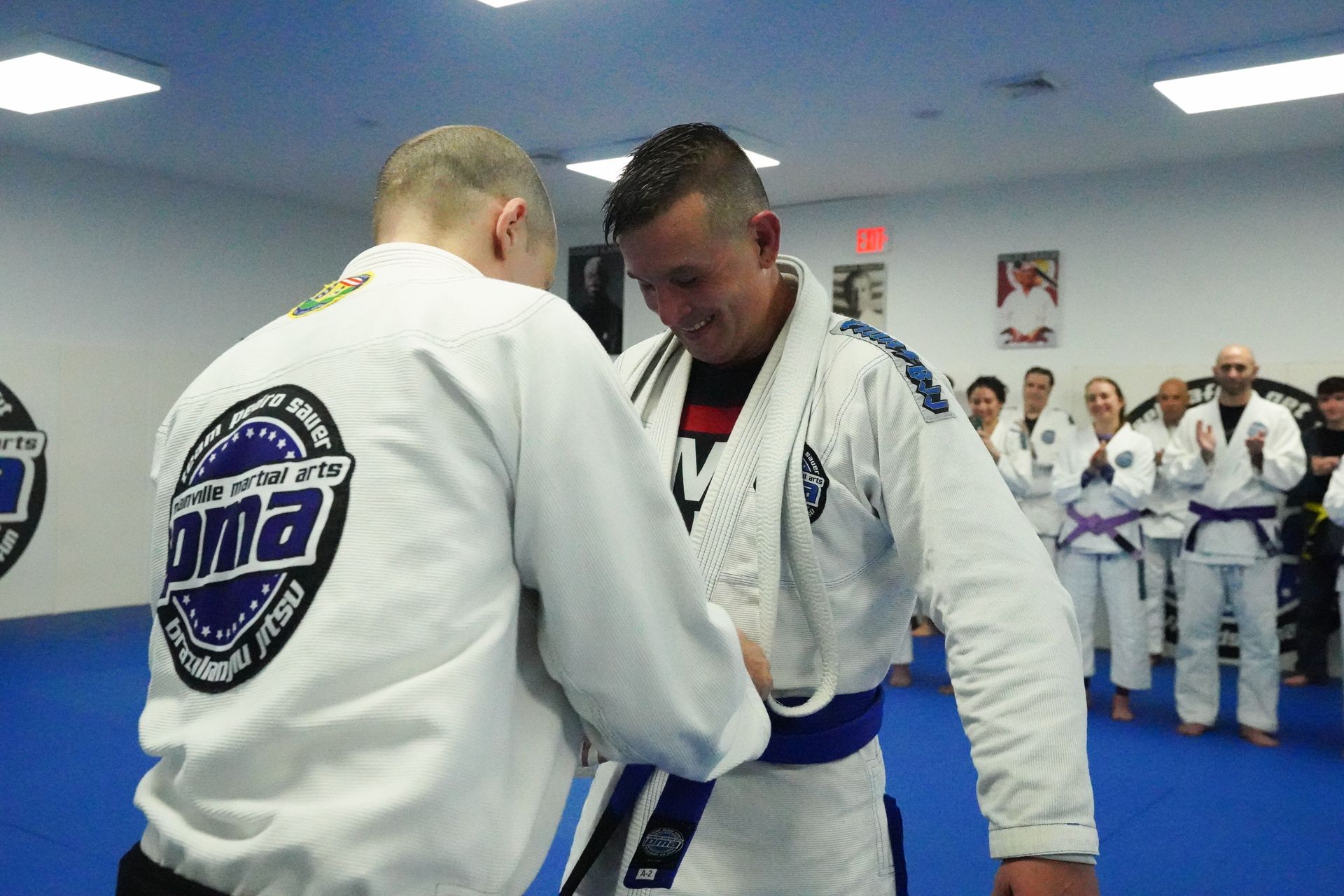
One reason martial arts is so effective for confidence is that progress is not vague. You do not just feel like you are improving, you can actually see it in your technique, your feedback, and your advancement milestones. Many beginners can reach a first belt level in about 8 to 12 weeks when attendance is consistent, and that early achievement matters. It gives you momentum.
We also treat rank as a responsibility, not a trophy. When you move forward, we expect your basics to be cleaner, your effort to be steadier, and your attitude to be helpful. That is what makes confidence feel grounded instead of fragile.
Skill mastery turns into real-world self-assurance
It is one thing to say, I can handle myself. It is another thing to practice escapes, boundary-setting, awareness habits, and controlled contact so your body knows what to do. We train with safety first, but we do not keep things abstract. Confidence grows quickly when you understand how to respond to common situations and you have practiced those responses enough that panic does not win.
For kids, that often shows up as less shrinking away in social situations. For teens, it can look like better posture and less reactivity. For adults, it might be the calm that comes from knowing you have options.
A supportive room changes how you see yourself
Confidence improves faster in an environment where effort is normal. We coach students to respect each other, partner safely, and push without bullying. That matters for shy students, students who have had a rough time in sports, and adults who have not tried something new in years.
You do not need to be loud to be confident. You need to be capable, consistent, and willing to learn.
Focus training: what we do in class that strengthens attention
Focus is not just paying attention. It is returning your attention, again and again, even when you are tired, distracted, or frustrated. Martial arts gives you a built-in reason to return: you want the technique to work.
Repetition that is not mindless
We use repetitive drills, but we do not treat them like autopilot. A simple punch can become a focus exercise when we ask you to pay attention to alignment, breathing, hip rotation, guard position, and timing. That is a lot of information, but it is broken into manageable pieces and layered over time.
This kind of practice builds concentration the same way strength training builds muscle: not from one heroic effort, but from regular, quality reps.
Breath and mental reset
Many traditional styles include elements that look like meditation or moving mindfulness. We keep it practical. We cue breathing for control, we slow things down when precision matters, and we speed things up when you need to stay calm under pressure.
That blend is important. A student who can only focus when things are quiet is not finished. A student who can focus while moving, while listening, while adjusting, and while being challenged is building something that transfers into real life.
Controlled sparring and pressure management
When appropriate for your level, controlled sparring is one of the best focus builders we know. It forces you to read distance, make decisions, and stay aware while adrenaline rises. The goal is not to win a brawl. The goal is to learn composure, timing, and decision-making.
This is also where confidence and focus meet. If you can stay calm in a safe, supervised, high-energy environment, you can usually stay calmer in a classroom presentation, a tough conversation, or a stressful workday.
What you can expect in our programs (kids, teens, adults)
We teach a mix of disciplines such as karate, taekwondo, and Brazilian jiu-jitsu, and we use each one to reinforce the bigger outcomes: confidence, focus, fitness, and practical self-defense. The training feels different depending on age, but the principles stay consistent.
Kids programs: confidence without attitude
In kids classes, we teach respect, listening skills, and body control alongside technique. For many children, the first big win is not a perfect kick. It is raising a hand, speaking clearly, or trying again after messing up.
We also incorporate anti-bullying concepts in the way we coach. That includes awareness, calm voice practice, boundary-setting, and knowing when to seek help. Physical techniques matter, but so does the ability to stay composed.
Teens: identity, resilience, and real focus
Teens often come in carrying stress, self-consciousness, or just that distracted, overloaded feeling. Training gives them a place to work hard, learn discipline, and see measurable progress.
A teen who learns to drill even when it is boring develops a kind of focus that helps with studying. A teen who learns to stay respectful in a tough round develops emotional control that helps in relationships and school.
Adults: stress relief that actually builds skills
A lot of adults start martial arts in Plainville because they want fitness, but they stay because their head feels clearer afterward. Training is physical, but it is also a mental break from constant notifications and responsibilities.
We keep adults moving, learning, and progressing. You do not need to be in perfect shape to start. You just need to start.
A simple framework we use to build confidence and focus
Here is what we emphasize, regardless of age or starting point:
• Clear goals: You know what you are working on each week, not just sweating through random drills.
• Feedback you can use: Corrections are specific so you can improve quickly without guessing.
• Progressive difficulty: We make it harder at the right pace, so you stay challenged without getting overwhelmed.
• Consistency over intensity: Two or three classes a week beats one intense week followed by a long break.
• Practical application: We connect techniques to situations so your confidence feels real, not theoretical.
• Community accountability: Training partners help you show up and keep going, especially on low-motivation days.
Getting started: how to make progress in your first 30 days
Your first month is about building routine and collecting early wins. We keep expectations realistic, because real confidence comes from consistency.
1. Pick a schedule you can repeat: Choose class times that fit your life, not an ideal fantasy week.
2. Show up early: Give yourself a few minutes to settle in, ask questions, and start focused.
3. Learn the basics on purpose: Stance, guard, movement, and breathing are where your confidence begins.
4. Track one improvement per class: It can be small, but naming it helps your brain recognize progress.
5. Stay patient with your timing: Coordination improves faster than you think, but it still takes reps.
If you do those five things, you will usually notice changes quickly, especially in posture, self-control, and overall attention.
Martial arts benefits you will notice outside the gym
People often join for one reason and then discover extra benefits they were not expecting. While every student is different, these outcomes come up again and again:
Better posture and body language: You look more confident because you move with intent.
More consistent routines: Training days anchor your week.
Improved emotional control: You get better at pausing before reacting.
Healthier stress response: Breath control and effort teach your body to stay steady.
More follow-through: When you learn to practice, you learn to finish what you start.
Those are not just gym skills. That is life skill development, built through martial arts.
Take the Next Step
Building confidence and focus is not about flipping a switch. It is about putting yourself in a place where progress is inevitable because the process is clear. That is what we aim to deliver every day: structured training, measurable goals, and coaching that meets you where you are.
At Plainville Martial Arts, we keep the path simple and honest: you show up, you practice, and you become more capable. If you are ready to see what that feels like in your own life or for your child, we would love to have you in for a first class.
Ready to train with purpose? Join a martial arts class at Plainville Martial Arts today.
