
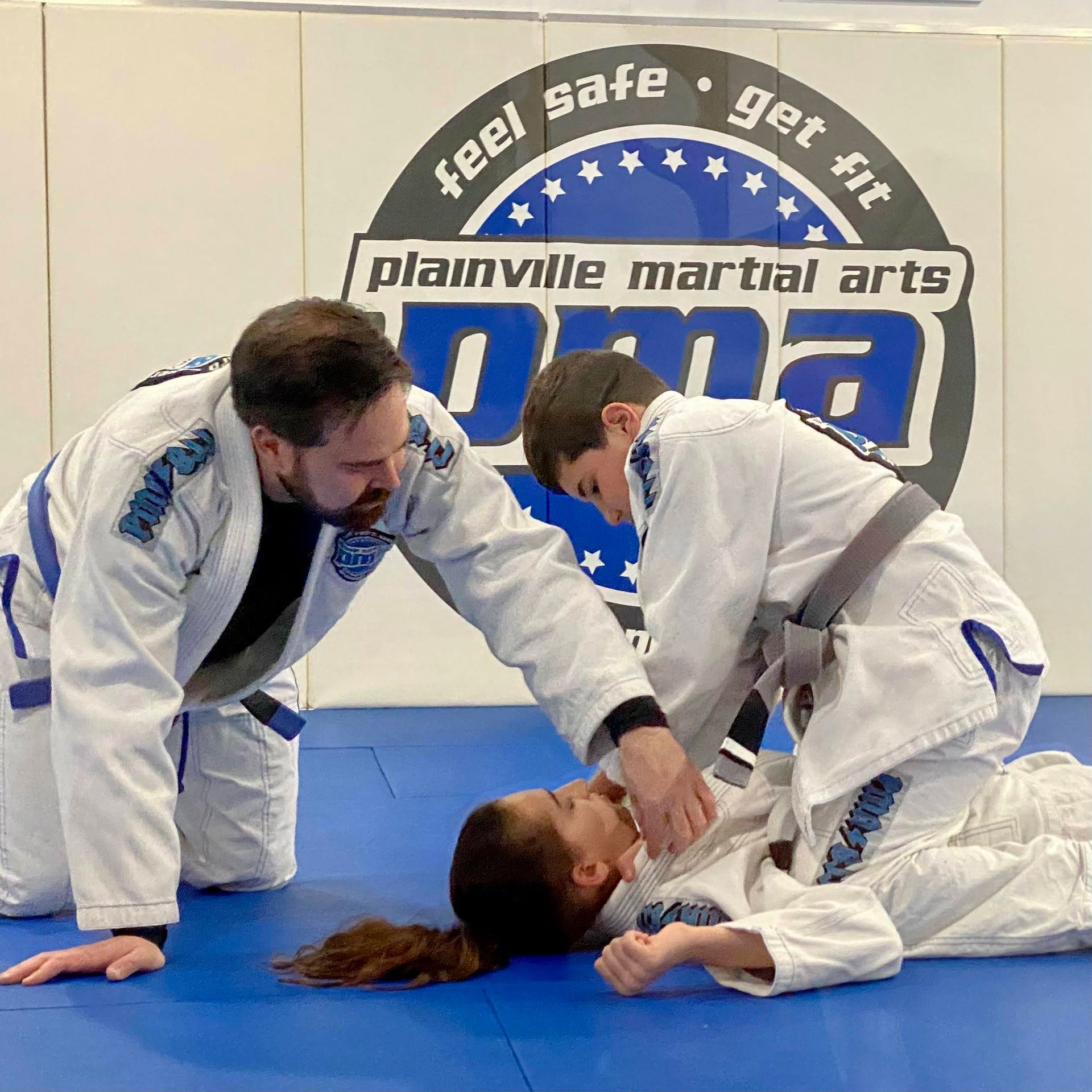
The right training routine can give you the kind of energy that lasts past the workout and into the rest of your day.
If your afternoons drag or your motivation feels inconsistent, it is usually not a character flaw. It is often a routine problem. Most people do not need another extreme plan or a complicated tracker, they need a practice that reliably flips the switch from tired and distracted to alert and engaged. That is where martial arts can make a real difference.
In our experience teaching martial arts in Plainville, the biggest change students notice is not just fitness. It is the feeling of momentum. You finish class a little sweaty, a little proud, and surprisingly more focused than when you walked in. Over time, that carries into work, school, and the everyday stuff that normally drains you.
This guide breaks down how training supports higher energy and stronger daily motivation, what that looks like for adults and kids, and how to build a schedule that actually sticks.
Why energy and motivation drop in the first place
Low energy is not always about sleep, although sleep matters. For many people, the real issue is that the day offers constant inputs and not many resets. You bounce between screens, obligations, and quick decisions. Your mind is busy, but your body is underused, so you feel wired and tired at the same time.
Motivation is similar. When your goals feel vague or your wins are hard to measure, you stop getting that sense of progress. Even if you are doing a lot, it can feel like nothing is moving forward. A good martial arts routine solves both problems by giving you clear feedback and a physical outlet that is structured, challenging, and honestly pretty satisfying.
Martial arts creates energy by engaging your whole system
A quality class does more than burn calories. It wakes up coordination, posture, breathing, reaction time, and decision-making under light pressure. That combination is why many students leave class with more energy than they started with, even after a tough session.
A better kind of fatigue
There is a difference between being drained and being pleasantly tired. Drained feels foggy. Pleasantly tired feels calm and capable. Martial arts tends to create the second kind because you are not just repeating a machine-like workout. You are learning skills, solving movement problems, and staying present.
Training helps regulate stress, not just release it
People often say exercise reduces stress, but martial arts has an extra layer. You practice staying composed while doing something challenging. You learn to breathe through effort, reset quickly after mistakes, and keep going with a clear head. That is a skill you can use on a busy Tuesday, not just in the training room.
The motivation boost comes from visible progress
Motivation usually follows results, not the other way around. When you can see yourself improving, you want to come back. Martial arts makes progress easy to notice because you feel it in your body, not just in numbers on a scale.
You might notice your balance improving when you pivot. You might realize you can hold your stance longer without your legs shaking. You might catch yourself reacting faster during partner drills. These are small wins, but they stack quickly, and that stack creates drive.
Confidence becomes daily fuel
A quiet benefit of consistent training is that your confidence becomes less conditional. When you have practiced difficult things on purpose, you start to trust yourself in normal life. That shows up as better follow-through. You send the email, finish the project, speak up in class, or stick to your routine because you have practiced commitment in a very physical way.
How a typical class supports energy from start to finish
We design classes to guide your body and mind from warm-up to skill work to conditioning and cooldown, with a pace that keeps you engaged without feeling chaotic. That structure matters because it is what makes training repeatable and sustainable.
A strong class usually includes:
- A warm-up that raises your heart rate and loosens your hips, shoulders, and spine so you feel mobile instead of stiff
- Technique practice where you learn a specific movement pattern, then repeat it with coaching until it clicks
- Partner work that adds timing, distance, and real feedback in a safe, controlled way
- Conditioning that builds stamina and grit without turning the session into a random exhaustion contest
- A short reset at the end so you leave feeling steady, not scattered
That last part is underrated. When you finish class with your breathing under control, your body learns to recover faster. Over time, that recovery skill helps you feel more capable during the rest of the day.
Practical ways martial arts affects your day outside the dojo
Most people start training for fitness or self-defense, but the lifestyle effects are what keep them going. Martial arts in Plainville can support your daily rhythm in ways that are surprisingly practical.
More consistent morning energy
Training improves circulation, movement efficiency, and conditioning. That can make mornings easier because your body is used to waking up and performing. Even if you train in the evening, the benefits show up the next day because your baseline fitness improves.
Better focus at work and school
Technique learning is focused learning. You have to pay attention to details, then apply them quickly. When you do that a few times per week, it carries over. Students often tell us they concentrate better after they start training because their brain is used to locking in on one task at a time.
A healthier relationship with discomfort
Motivation disappears when you avoid discomfort. Martial arts gently rewires that. You get used to being a little uncomfortable and continuing anyway, safely and with support. That is not just toughness, it is mental flexibility.
Youth training and the energy-motivation connection
For kids and teens, energy is not always the problem. Direction is. Many young students have plenty of energy, but it comes out as restlessness, frustration, or quitting when things get hard. Youth martial arts in Plainville gives that energy a channel and turns it into steady effort.
What kids learn that helps them in real life
Training is a practice in listening, doing, adjusting, and trying again. That is exactly what school requires, but school does not always teach it directly. A well-run class makes expectations clear and gives immediate feedback, which many kids respond to.
We see improvements in:
- Follow-through, because class is built around completing tasks in a sequence
- Emotional control, because students practice resetting after mistakes
- Confidence, because progress is earned in visible steps
- Respect and cooperation, because partner drills require awareness and safe control
Kids also sleep better when they move their bodies with purpose. That alone can change the mood in a household, and yes, parents notice.
Building a schedule that boosts energy without burning you out
The best plan is the one you can keep. Training should make your life easier, not more stressful. We help students choose a realistic routine based on goals, recovery, and family schedules.
Here is a simple approach that works for most beginners:
1. Start with two classes per week for the first month to build consistency and let your body adapt
2. Add a third class when you feel recovery improving and your technique starts to feel more natural
3. Keep at least one rest day between harder sessions if you are also lifting weights or running
4. Track one small win each week, like improved balance, better breathing, or remembering a new combination
5. Reassess every four to six weeks and adjust your class schedule rather than quitting when life gets busy
Consistency beats intensity. If you train a little less but show up regularly, your energy and motivation will rise faster than if you go hard for two weeks and disappear for a month.
Nutrition, hydration, and recovery tips that pair well with training
We are not here to police your meals, but small habits make martial arts feel much better. If you want more energy, recovery has to be part of the plan.
A few simple guidelines many students find helpful:
- Drink water earlier in the day, not just right before class, so you do not start training already dehydrated
- Eat a light meal with protein and carbs two to three hours before class to avoid feeling sluggish
- If you train after work, a small snack can prevent that low-blood-sugar crash during drills
- Aim for steady sleep, because skill learning improves when your brain is rested
- Do a short cooldown stretch at home if your hips and shoulders tend to tighten up
You do not need perfection here. You just want enough support so the work you do in class actually translates into feeling better the next day.
What to expect as a beginner in martial arts in Plainville
Starting anything new can feel awkward for about five minutes. Then you realize everyone is focused on learning, not judging. Our job is to teach in a way that makes the first class feel doable and the second class feel familiar.
You can expect clear coaching, progressive drills, and a pace that challenges you without overwhelming you. We want you to leave class thinking, I can do this, and I can get better at this. That sense of possibility is a big part of why martial arts improves motivation. It gives you a place where effort turns into progress, reliably.
Take the Next Step
Building higher energy and daily motivation is rarely about willpower. It is about putting the right practice in the right place on your calendar, then letting the results reinforce the habit. If you want a training routine that strengthens your body, sharpens your focus, and makes you feel more switched on day to day, we are ready to help.
We built our programs to support real people with real schedules, including adults who want better fitness and confidence and families looking for youth martial arts in Plainville that develops discipline without draining the fun out of it. When you are ready, Plainville Martial Arts is here with a clear path forward and a class environment that keeps you moving.
See what makes training at Plainville Martial Arts special by joining a class today.
