Stress does not disappear when life gets busy, but your response to it can change faster than you think.
Adult stress in Plainville can feel oddly predictable: work demands, family logistics, commutes that take longer than they should, and that persistent sense that your brain never fully shuts off. When you search for relief, you might assume the only options are to slow down (not realistic) or to push through (also not great). We prefer a third option: train your body and mind together so your stress response gets steadier, not just quieter.
That is where martial arts fits so well. Yes, it is physical, and that helps, but the bigger benefit is how training teaches you to regulate attention, breathing, and emotion under pressure. In our adult classes, we see how quickly structure and repetition can create a calm you can actually use at home, at work, and in the middle of everyday chaos.
In this guide, we will break down how martial arts in Plainville supports stress relief in the short term, builds resilience over time, and gives you practical tools you can carry into the rest of your week.
Why stress feels different as an adult in Plainville
Stress is not just one feeling. It is a full-body process that shows up as tight shoulders, shallow breathing, a short fuse, restless sleep, or mental fog that follows you from task to task. For a lot of adults, stress also becomes “normal,” which is a problem because you stop noticing how much it is shaping your decisions.
In Plainville, many adults juggle long workdays with responsibilities that start the moment you get home. Some days, even self-care can feel like another item on the checklist. A martial arts class can be different because it creates a clear boundary in the day: you show up, you focus, you sweat, you breathe, and for 45 to 60 minutes you are not carrying everything else.
That boundary matters. When your nervous system gets a consistent signal that it is safe to shift gears, your stress response can soften, and it becomes easier to choose calmer reactions outside the dojo too.
What martial arts does to stress beyond “getting a workout”
Any exercise can help mood, but martial arts adds layers that make it especially effective for everyday stress management. Research in recent years has highlighted a sequence we recognize in real training: physical engagement boosts positive emotions and stress relief first, and then psychological resilience builds with repetition.
Physiological reset: intensity, endorphins, and stress hormones
A well-run class alternates between effort and control. You might hit pads, drill combinations, or work through conditioning in a way that elevates your heart rate and releases endorphins. That post-class “lighter” feeling is not imaginary, it is your body shifting chemistry.
Studies also point to martial arts training supporting healthier stress-hormone patterns, including moderated cortisol levels. You do not need to measure cortisol to notice the outcome. Many adults simply report that they sleep deeper, feel less reactive, and have more patience in the hours after training.
Mental reset: one task at a time, no multitasking allowed
Stress thrives on mental clutter. Martial arts training is almost aggressively anti-clutter because you cannot do five things at once. You have a stance, a target, a breath, a timing cue. You either stay present or you miss details.
That repeated practice of “come back to the moment” works a lot like mindfulness, but it can feel easier for adults who do not want to sit still and meditate after a long day. Controlled breathing, posture awareness, and focus under instruction train the same skill: attention on purpose.
Emotional regulation: learning calm while doing something hard
A major stress skill is staying steady when something is uncomfortable. Martial arts gives you safe, structured discomfort: a challenging drill, a faster pace, a new technique that feels awkward at first. You learn to notice frustration without letting it drive the car.
Combat-sport research has also linked training with improved self-efficacy, reduced symptoms of anxiety and depression, and stronger resilience. We see that confidence in adults who start out feeling overwhelmed and, after a few weeks, begin trusting their ability to handle pressure.
Resilience: the long-term stress benefit most adults want
Stress relief is great, but resilience is the real prize. Resilience means you still have stressors, but you recover faster and stay more in control.
Research on martial arts practitioners shows meaningful gains in ego-resilience, particularly in:
- Control over responses to stress (effect size d=0.47)
- Viewing challenges as growth opportunities (d=0.27)
In everyday terms, that looks like not spiraling after a tough meeting, not snapping at your family when you are tired, and not letting one stressful moment ruin your whole day. Interestingly, studies also note stronger effects for women practitioners compared to non-practitioners in these resilience areas, which matches what many women tell us: training becomes a reliable place to rebuild personal control.
How our classes turn stress into a skill you can train
We run adult martial arts classes with a simple goal: give you a consistent process that upgrades how you feel and how you respond to pressure. You do not need a background in sports, you do not need to be flexible, and you do not need to be “tough.” You just need a willingness to practice.
The structure matters more than you might think
A common stress trap is decision fatigue. When you are already maxed out, figuring out what to do at the gym can feel like work. Our class structure removes that burden. We warm up, we build skills in progressive layers, and we finish with training that leaves you worked and clear-headed.
That predictability is calming. Your mind gets to stop negotiating and just follow a plan.
Breath and posture are not small details
When stress rises, breathing gets shallow and shoulders climb. In class, we coach breath timing with movement, exhale on strikes, reset with controlled inhalations, and maintain posture that keeps you grounded. These are physical habits, but they become emotional habits too.
Over time, many adults notice they start using the same breathing patterns in traffic, during conflict, or before a presentation, almost automatically.
Community reduces stress even when you do not talk about stress
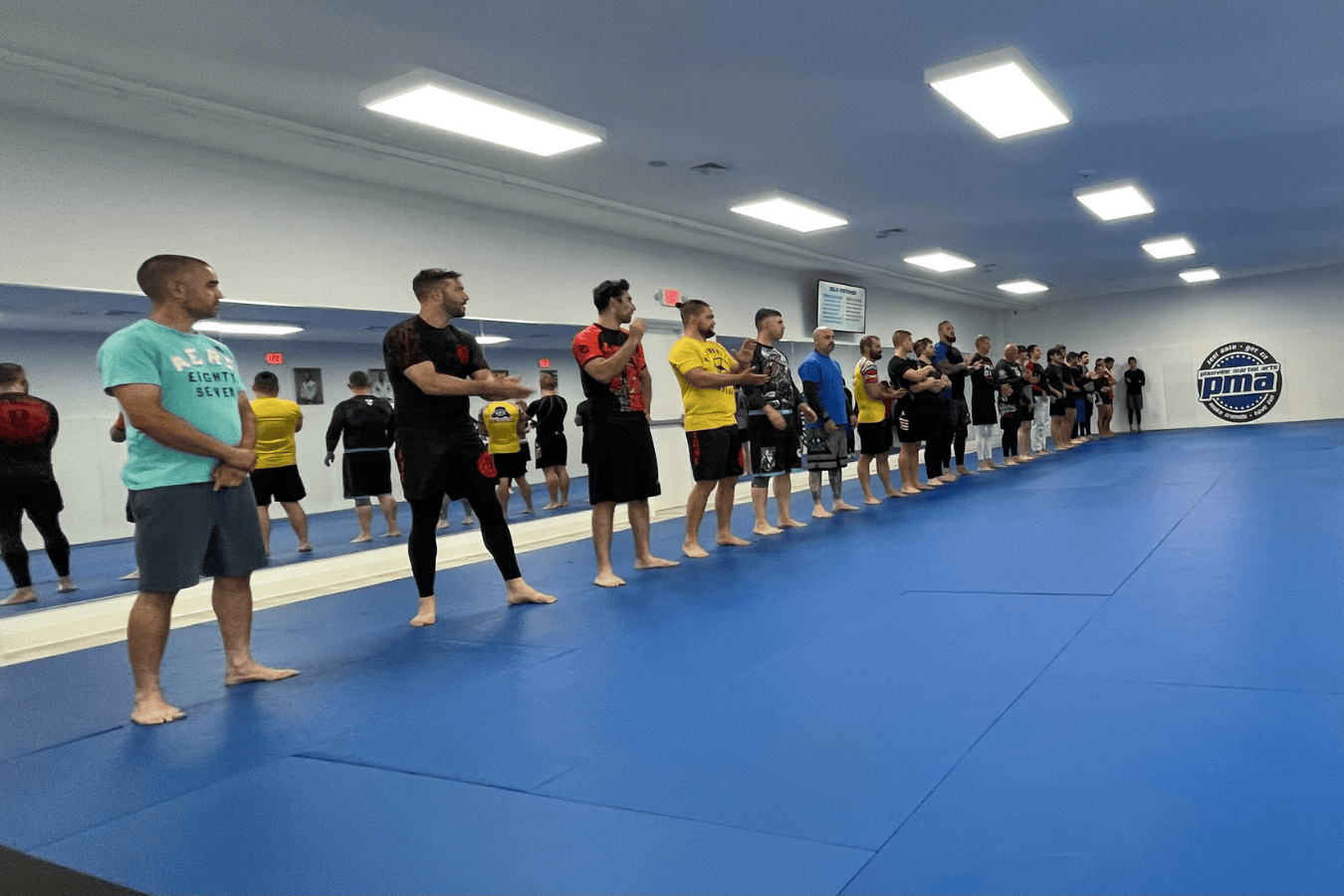
Adult life can be isolating. Training beside people working toward the same goal builds a low-pressure sense of connection. You do not have to show up and explain your week. You just show up, work, and get welcomed back next class.
That is a big deal for stress because social support is one of the strongest buffers we have, and a healthy training environment provides it naturally.
What stress management looks like for beginners (and what it does not)
A lot of adults hesitate because they picture sparring wars or getting hurt. Our approach is controlled and progressive. Safety is not a side note, it is part of the curriculum, and it is one reason martial arts can be such a good non-pharmacological wellness tool.
You can start even if you are over 30, over 40, or just tired
Martial arts in Plainville should be accessible to real adults with real bodies and real schedules. We scale intensity, adjust drills, and coach technique so you build fitness without feeling punished. Some people like higher-intensity rounds because it burns off nervous energy. Others prefer a steadier pace with more technical focus. Both can reduce stress, just in different ways.
Injury concerns: what to expect
No physical activity is risk-free, but structured training emphasizes control, awareness, and respect for partners. You learn how to move well before you move fast, and you practice techniques with supervision and clear boundaries. That environment supports stress adaptation without encouraging reckless intensity.
If you have old aches or a high-stress job, tell us. We will help you train intelligently.
A realistic timeline: how fast you might feel better
Adults want to know when the benefits kick in. Based on both research trends and what we observe weekly, stress relief often shows up first, then resilience builds.
Here is what many adults notice over time:
1. After the first class: a mood lift, a clearer head, and surprisingly quiet mental noise for a few hours
2. After 2 to 3 weeks of consistent training: better sleep, less tension in the neck and shoulders, and fewer stress spikes
3. After 6 to 8 weeks: more stable confidence, improved emotional control, and a stronger sense of “I can handle this”
4. Beyond that: stress still happens, but you recover faster and you default to calmer habits
Some intervention studies report 70 to 80 percent of participants noticing lower anxiety after around eight weeks. Results vary, of course, but the pattern is consistent: regular practice compounds.
Practical ways to use martial arts stress tools outside class
You do not need to wait for the next session to benefit. We encourage adults to use simple carryover tools during the week, especially on high-stress days.
Here are a few that work well:
- Use a 4 to 6 second exhale when you feel your shoulders tighten, and repeat it three times before you respond
- Stand with balanced posture (feet grounded, head tall) before stressful conversations to reduce physical reactivity
- Choose one task at a time for 10 minutes, like you would in a drill, and finish it before switching
- Keep a brief mood journal after training for a month so you can see patterns, not just guess
- Treat challenges as reps, not judgments, the same mindset that makes techniques improve faster
These are small, but that is the point. Stress management works best when it is repeatable.
Choosing the right training emphasis for your stress style
Not all stress feels the same. Some adults carry anxious energy and need a strong physical outlet. Others feel mentally overloaded and need structured focus.
In our adult martial arts program, we can lean into different emphases depending on what helps you most:
- High-energy pad work for endorphin release and mood reset
- Technique-focused drilling for attention control and confidence
- Controlled partner work to practice calm under pressure
- Breath-led pacing to improve emotional regulation
- Progressive goals that create momentum when life feels stuck
When your training matches your stress pattern, you get more than a workout. You get a system.
Take the Next Step with Plainville Martial Arts
The most useful stress strategy is the one you will actually do consistently, and we have built our adult programs to make that consistency realistic. At Plainville Martial Arts, you can train with structure, coaching, and a community that supports growth without making life more complicated.
If you are looking for martial arts in Plainville that helps you feel calmer, stronger, and more in control of everyday pressure, we would love to help you get started in a way that fits your schedule and your current fitness level.
Experience how consistent training builds discipline and resilience at Plainville Martial Arts.
