Your first class should feel clear, safe, and surprisingly doable, even if you are walking in with zero experience.
Starting martial arts for the first time brings a lot of questions, and most of them are practical. What will we actually do? Will you be the only beginner? Do you need to get in shape before you show up? Around Plainville, we hear those concerns every week, especially from adults who have not trained since gym class (or ever).
Here is the good news: beginner training is supposed to be structured. Our job is to make your first class feel welcoming, organized, and paced so you can learn fundamentals without feeling rushed or judged. If you can show up and follow a few simple cues, you can start.
And because interest in martial arts has surged in recent years, a lot of first-timers are in the same boat as you. Many beginners are adults over 30 looking for functional fitness, stress relief, and real self-defense, not a competition team. That shift has helped shape how we teach day to day.
Why beginners are choosing martial arts in Plainville right now
People often come in for one reason and end up staying for another. You might start because you want self-defense, but then notice your posture improves, your stress drops, and you feel better in your body. Or you come for fitness and realize learning a skill keeps you more consistent than a treadmill ever did.
In Plainville, schedules are busy and commutes are real, so the training environment matters. We keep classes efficient and beginner-friendly so you can train without needing your whole life to revolve around it. That is also why flexibility in the class schedule and clear instruction matter as much as intensity.
The biggest thing we want you to know before you step on the mat: you are not expected to be tough on day one. You are expected to be curious, respectful, and willing to practice.
What happens in your first class (a real walkthrough)
Most people relax once they know the flow. While every day has a theme, a first class generally follows a consistent structure so you can settle in and focus.
1) Arriving and getting oriented
Plan to arrive about 10 to 15 minutes early if you can. That little buffer helps you breathe, sign in, meet us, and ask questions without feeling like you are sprinting into something unfamiliar. We will point you to where to put your shoes and gear, and we will help you get set up with what you need.
If you are doing a trial class, we make it simple. You will not be expected to memorize rules. We will cover the few basics that keep everyone safe and comfortable.
2) Warm-up that actually matches the art
Warm-ups are not random. In beginner martial arts classes, we use movement prep that supports what you will practice next: balance, hip mobility, core engagement, and safe ways to move on the ground.
Expect a mix of light calisthenics and mobility work. Nothing fancy, and you can always scale up or down. The goal is to wake up your body and reduce injury risk, not to prove anything.
3) Technique introduction, step by step
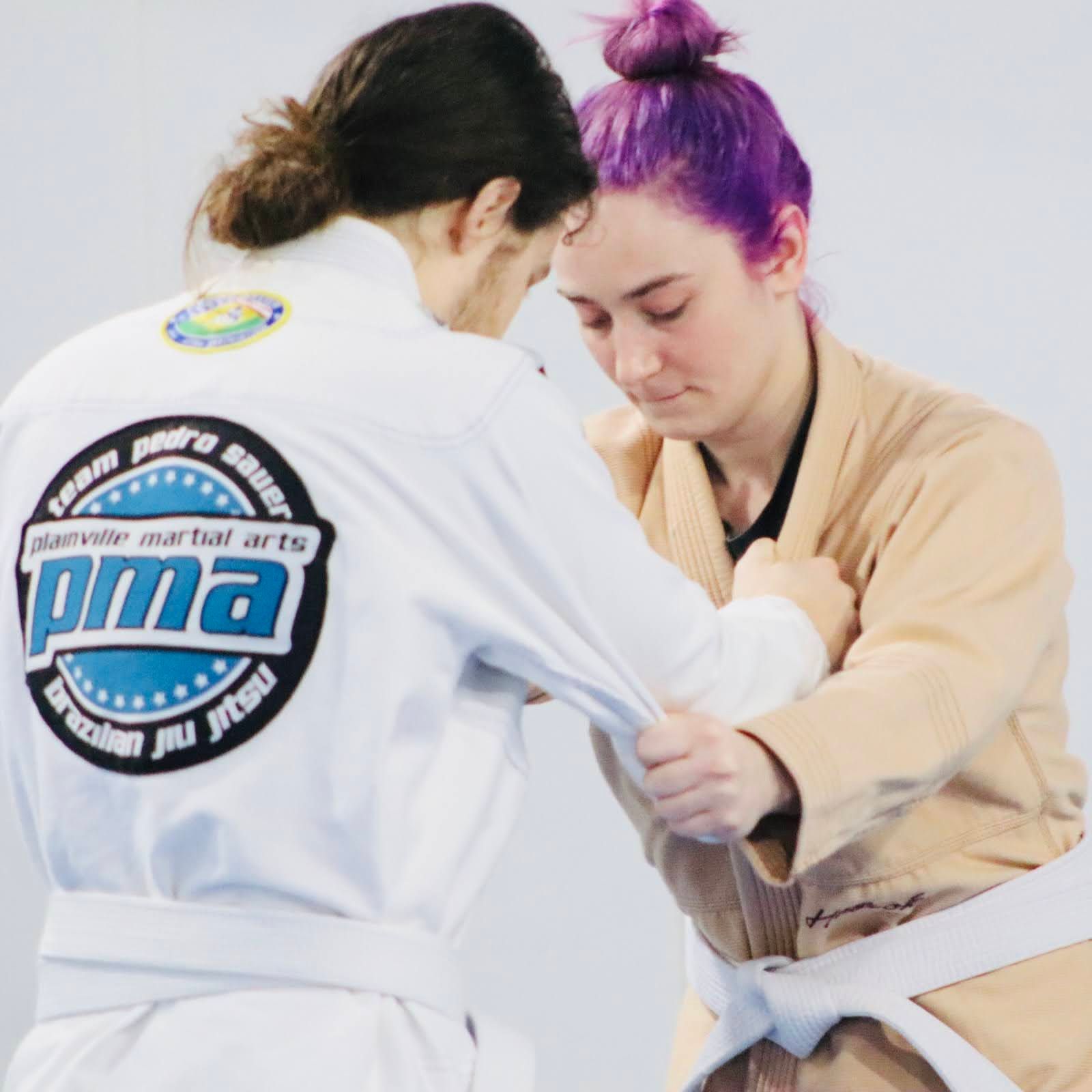
This is the heart of class. We demonstrate a small set of skills and then coach you through them. For beginners, we focus on fundamentals like posture, base, movement, and positioning. If we are training Brazilian Jiu-Jitsu concepts, we will keep it approachable: how to move safely, how to frame, how to escape common positions, and how to stay calm while problem-solving.
You will hear details that matter, like where to put your hands, how to shift your weight, and why a small angle change can make a technique work with less effort. That is one reason martial arts can feel addictive in a good way: the improvements are measurable, even in your first hour.
4) Partner drilling without pressure
After you see the technique, you practice it with a partner in a controlled way. We pair beginners thoughtfully, and we keep the intensity appropriate. Drilling is not sparring. It is more like learning a dance step: repeat, reset, repeat again, and ask questions as you go.
This is usually where confidence starts to show up. Not because everything is perfect, but because you realize you can learn a new physical skill without being “naturally athletic.”
5) Cool-down and questions
We usually finish with a short cool-down and time for questions. If something felt confusing, that is normal. We would rather you ask and leave with clarity than guess at home.
By the end of your first class, you should feel like you learned something specific, not like you just got “worked out.”
What you should wear and bring to your first session
You do not need specialty gear to start. Comfort and safety are the priority.
Bring or wear:
- Comfortable athletic clothing that allows movement (think t-shirt and training pants or shorts)
- A water bottle, because you will sweat more than you expect
- Simple hygiene basics like deodorant and trimmed nails (it matters on the mats)
- An open mind and a willingness to be a beginner for a minute
If you have questions about uniforms or gear, we will walk you through it before you invest in anything. Trial classes are designed to remove barriers, not create them.
Is it safe, and what if you feel intimidated?
Safety is not an accident in martial arts. It comes from structure, coaching, and culture. We keep beginners out of situations that do not match their experience level, and we emphasize control over intensity.
If you are worried about being intimidated, you are probably picturing the wrong environment. A beginner program should feel supportive, not like a tryout. You will be coached, corrected, and encouraged, and you will also be reminded to take your time. Progress is the goal, not perfection.
A quick note that surprises some people: you can train hard without training angry. Good training is focused, respectful, and calm, even when it is challenging.
What you will learn first (and why it matters)
Beginner martial arts training is about building a foundation you can actually use. We start with skills that transfer: movement, balance, posture, and practical problem-solving under mild pressure.
Here are a few themes you can expect early on:
- How to stand, move, and keep your balance when someone is close
- How to protect yourself with positioning and leverage, not brute force
- How to escape common holds and reset to a safer position
- How to stay composed and keep breathing when things feel fast
- How to train with partners respectfully so everyone improves
When you hear us talk about “fundamentals,” we mean repeatable skills that show up everywhere, not a pile of techniques you forget next week.
Fitness benefits you will notice faster than you think
A lot of beginners assume they need to get fit before they start martial arts. In reality, training is what builds the fitness. Because classes combine movement, strength, and coordination, you get a full-body stimulus without staring at a clock.
Over time, you can expect improvements in:
- Functional strength, especially through your hips, core, and upper back
- Flexibility and mobility, because you are moving through real ranges of motion
- Agility and coordination, since your body learns to respond with control
- Endurance, because rounds and drills add up quickly
- Stress reduction, because focused training pulls your attention into the present
That last one matters more than people admit. Many students leave class feeling mentally lighter, even if their muscles are tired.
How we keep training beginner-friendly and still effective
Beginner-friendly does not mean watered down. It means we coach the process. We scale intensity, we teach the why behind the movements, and we help you build skills in layers so you do not feel lost.
We also keep the environment grounded. Respect and discipline are not slogans, they are how people train safely together. When the room has a no-ego culture, beginners thrive because questions are normal and mistakes are part of learning.
If you want faster progress or you prefer learning at your own pace, private lessons are also an option. Some people like a little extra one-on-one time to tighten up basics, especially in the first few weeks.
Your first month: what progress usually looks like
Beginners often want to know what “good” looks like early on. Here is a realistic timeline we see all the time. It is not a promise, just a common pattern when you show up consistently.
1. Week 1: You learn the class flow, basic movement, and a couple of core concepts that make everything else easier.
2. Week 2: Techniques start to feel less confusing, and you stop overthinking every step.
3. Week 3: Your conditioning improves, and you begin noticing small wins, like cleaner escapes or better balance.
4. Week 4: You feel more comfortable training with different partners, and you start building a repeatable routine.
Consistency beats intensity here. Two to three sessions a week is plenty for most adults, especially when you are also juggling work and family.
Common beginner questions we answer every day
Do you need experience or a certain fitness level?
No. We coach you from wherever you are starting. If you need breaks, take them. If a movement needs to be modified, we modify it. Martial arts should meet you where you are and then raise the bar over time.
Will you have to spar on day one?
Not typically. We prioritize drilling, learning, and controlled practice first. When sparring is introduced, it is done progressively and with safety in mind, not thrown at you as a surprise.
What if you feel awkward?
That is normal. New movement patterns feel weird before they feel natural. Most people look a little clumsy at first, and then one day it clicks. The important part is that you keep showing up and let the learning happen.
How do you fit training into a busy schedule?
We keep options available so you can build training into real life, not an ideal week. The class schedule page on the website is the best place to see current times and plan ahead.
Ready to Begin
Building skill in martial arts starts with one good first class, and we take that first experience seriously. You should leave knowing what you practiced, why it matters, and what to do next, whether your goal is self-defense, fitness, or simply feeling more capable in your body.
If you are in Plainville or nearby towns and want a structured, beginner-friendly approach, we would love to have you train with us at Plainville Martial Arts. You can start with a trial class, ask questions, and move forward at a pace that makes sense.
New to martial arts? Start your journey by joining a martial arts class at Plainville Martial Arts.
