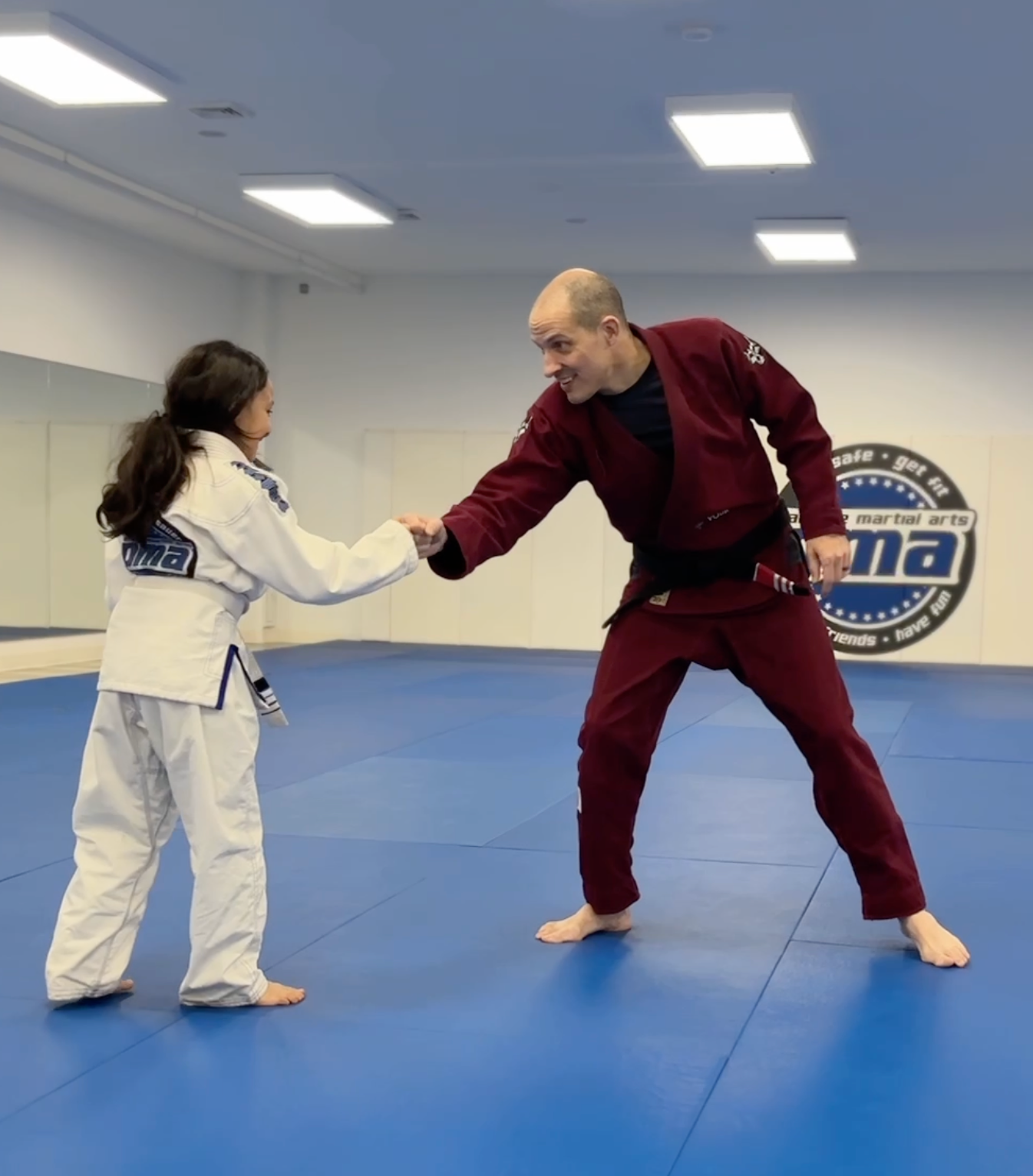
The right training environment can turn everyday nerves into steady confidence and real, practiced respect.
Kids in Plainville are busy, and most families are juggling school, homework, sports, and screens that never seem to stop. When parents ask us about martial arts, the question is rarely just about punches and kicks. It is usually about confidence, focus, and how to help a child carry themselves a little better in the real world.
We see that need every week in class. A child walks in a bit unsure, eyes scanning the room, hands in pockets. A few weeks later, that same child stands taller, answers clearly, and remembers to show respect without being reminded. Martial arts can do that when the program is structured, consistent, and built around character as much as technique.
In Plainville, Connecticut, families also want activities that feel safe, organized, and worth the time. Our job is to make that simple: clear expectations, age-appropriate coaching, and a path your child can actually follow from day one.
Why martial arts works so well for confidence and respect
Confidence is not something we hand out with a uniform. It is built through small wins that stack up. In martial arts, those wins are built into the system: learning a stance, remembering a combination, earning a stripe, or simply staying calm while trying something new. Your child learns, in a very practical way, that progress comes from effort.
Respect develops the same way. We teach that respect is not just saying yes maam or yes sir. It is listening the first time, keeping hands to yourself, taking turns, and treating training partners with care. That last part matters a lot because kids learn quickly that the room works only when everyone is safe and valued.
There is also something reassuring about the structure. Kids tend to thrive when rules are clear and consistent. Martial arts class has a beginning, a middle, and an end. We bow in, we follow instructions, we practice, and we cool down. Over time, that routine becomes a steadying rhythm your child can lean on.
What you can expect from our kids program in Plainville
We keep our kids curriculum focused on fundamentals that build athleticism and character at the same time. Your child does not need to be naturally coordinated or outgoing to start. We coach to the child in front of us, and we build from there.
A typical class includes a warm-up that improves balance and mobility, skill practice that emphasizes proper mechanics, and partner drills that teach control. We also leave space for repetition because repetition is where confidence is born. Kids do not just learn a technique once. We help your child own it.
You will also notice we manage energy on purpose. Some kids arrive bursting with excitement, and some arrive tired from school. Our instructors guide the room so kids learn when to be active and when to be calm. That ability to shift gears is a life skill, not just a training skill.
Ages, readiness, and how we group students
Parents often ask what age is best to begin martial arts. In our experience, many children do well starting around ages four to six as long as the program is designed for attention span and safety. Older beginners do great too, especially when the curriculum gives a clear pathway for advancement.
We group students in a way that helps everyone learn. Age and size matter, but so does maturity. A focused six-year-old may be ready for a bit more detail, while an energetic eight-year-old may need simpler steps first. We adjust in real time, and we keep the tone supportive while still holding standards.
If you are unsure whether your child is ready, the easiest answer is to try a class. You will see quickly if your child can follow a few directions, participate safely, and stay engaged. If the first class feels a little wobbly, that is normal. Many kids need a couple sessions to settle in.
Confidence in real life: what changes outside the dojo
Confidence shows up in small places first. We hear from parents that kids start speaking up more clearly at home, making eye contact, and taking pride in finishing tasks. Teachers sometimes notice improved listening and a better ability to handle frustration.
One reason martial arts transfers so well is that we practice being uncomfortable in a safe setting. Trying a new technique, making a mistake, and trying again is normal here. That teaches resilience without a lecture.
We also teach kids to keep composure under pressure. Even light partner drills can feel intense at first. When a child learns to breathe, focus, and respond with control, that same calm can help during a test at school or a tough conversation on the playground.
Respect without fear: how we teach discipline the healthy way
Discipline should not mean a child feels scared to fail. Our approach is firm, consistent, and encouraging. We correct technique, we set boundaries, and we expect students to try. At the same time, we reinforce effort and improvement, not perfection.
Respect in martial arts includes respecting your own body. We teach kids to move safely, to tap out when needed during controlled drills, and to communicate if something feels off. That kind of self-advocacy is part of respect too.
We also build respect through responsibility. Kids learn to line up, to keep their gear organized, and to help maintain a clean training space. These are small habits, but they add up. A child who practices responsibility in class is more likely to practice it at home.
Bullying, boundaries, and personal safety skills
Many parents in Plainville look to martial arts because bullying is real, and kids need tools that go beyond advice like just ignore it. We focus on layered skills: awareness, confident body language, verbal boundary setting, and physical skills that are age-appropriate and safe.
We teach kids to use their voice, to create space, and to seek help early. Physical techniques are taught with control and with a clear framework: self-defense is about getting safe, not getting even. That mindset matters because it prevents reckless choices and encourages good decision-making.
Over time, kids often become less appealing targets simply because they carry themselves differently. When posture improves, eye contact is steady, and a child looks prepared to speak up, the social dynamic can shift.
How our belt system motivates without bribing
Belts can be a great motivator when used correctly. We treat rank as feedback, not as a prize for attendance. Your child earns progress by showing specific skills and behaviors consistently.
That includes technical improvement like better balance, proper form, and stronger coordination. It also includes character habits like respect, listening, and self-control. In other words, the belt reflects the whole student.
Parents like the clarity of the system. Kids like the sense of direction. And honestly, it helps at home too, because you can say, show me the focus you use in class, and kids usually know what that means.
What a first class is like, step by step
Starting something new can feel big for kids, so we keep the first experience welcoming and structured. Here is how the first class usually goes:
1. You check the class schedule and arrive a little early so your child can settle in and see the room.
2. We greet you, help with basic orientation, and explain how we line up and follow instructions.
3. Your child joins the warm-up and learns a few foundational movements, like stance and basic strikes or blocks.
4. We practice a simple combination and a confidence drill that lets your child succeed quickly.
5. After class, we answer questions about next steps, class frequency, and what to expect as skills build.
Most kids leave class feeling proud and pleasantly tired. It is a good kind of tired, like their body and brain both got something useful to do.
Practical benefits you will notice: fitness, focus, and coordination
Martial arts supports overall fitness in a way that keeps kids engaged. Classes involve cardio, strength, flexibility, and agility, but it does not feel like a workout in the boring sense. Kids are moving with a purpose.
Coordination improves because we train both sides of the body and we repeat patterns until they stick. Focus improves because kids learn to watch, listen, and do. That sounds simple, but it is not always easy for young students, and practice helps.
We also build spatial awareness. Kids learn distance, timing, and control, which can reduce clumsiness and help with other sports. Even kids who say, I am not athletic, often surprise themselves after a month or two.
Our approach to safety, supervision, and positive culture
Safety is not a single rule. It is a culture. We teach students how to be good partners, how to respect personal space, and how to follow instructions quickly. Our instructors supervise drills closely and scale intensity to the age group.
We also keep the room positive. Kids work hard, but we do not allow teasing or careless behavior. When mistakes happen, we correct them and move forward. That helps kids feel safe taking healthy risks, which is exactly how confidence grows.
Parents in Plainville appreciate that our classes run with structure. When expectations are consistent, kids relax and learn faster. It is predictable in the best way.
Scheduling, membership options, and making training realistic
Most families need a plan that fits real life, not an imaginary perfect week. Our class schedule is designed to support consistent training with options that work around school and other activities. Consistency matters more than cramming.
We offer membership options that support steady progress. Some families start with a lighter schedule and increase as their child falls in love with training. Others choose a more consistent weekly routine right away. We help you pick what makes sense based on your child’s temperament and your calendar.
If you are also thinking long-term, martial arts can become a stable anchor activity. Kids can train across seasons, build friendships, and keep progressing without having to start over every few months.
A note for parents: adult training is available too
Even when you are focused on your child, you might find yourself watching class and thinking, I could use this. We offer adult training as well, and adult martial arts in Plainville can be a practical way to improve fitness, manage stress, and learn self-defense skills in a structured environment.
Some parents train at the same time their kids do, which makes the routine easier. Others keep it separate and use class as their own reset button. Either way, training as an adult models something powerful for kids: growth does not stop when you get older.
Take the Next Step
If you want a kids program that builds confidence and respect in a way you can actually see week to week, we are ready to help. Our classes combine structure, athletic development, and character coaching so your child learns how to move with control and speak with confidence, on and off the mat.
When you are ready, Plainville Martial Arts makes it simple to start with clear guidance, a supportive environment, and a path that keeps your child progressing. We are proud to be part of the Plainville martial arts community, and we would love to welcome your family.
Improve your fitness, confidence, and focus through martial arts training at Plainville Martial Arts.
