Your first class should feel welcoming, structured, and surprisingly doable, even if you have never trained before.
Walking into your first martial arts class can bring up a mix of excitement and questions. What should you wear? Will you be expected to spar right away? Are you going to slow everyone down? We hear these concerns all the time, and the truth is simple: beginners are exactly who our intro classes are built for.
In Plainville, CT, many adults and teens start training with everyday goals like getting in shape, learning practical self-defense, or finding a routine that actually sticks. Our job is to make your first visit clear, comfortable, and organized, so you can focus on learning instead of guessing what comes next.
This guide breaks down what you can expect from your first class with us, from how to prepare to what training feels like on the mat, and what happens after class when you decide how you want to continue.
Before You Arrive: How to Prepare Without Overthinking It
Preparation for your first class is mostly about showing up with the right mindset. You do not need to be flexible, athletic, or experienced. You do not need to memorize techniques from videos. You just need to arrive ready to learn and ready to move a little.
What to wear (and what not to worry about)
For a first session, comfortable workout clothes are perfect. Think a t-shirt and athletic pants or leggings that let you step, squat, and kick without feeling restricted. If you already own training gear, great, but most first-timers do not.
A few simple tips help you feel more at ease:
- Avoid jeans or anything with zippers that can scratch during partner drills
- Bring water, because you will use it
- Tie long hair back so you are not fighting it while you learn
- Leave jewelry at home for safety and comfort
If you are unsure about uniform expectations, our front desk team can point you in the right direction, and the website has helpful guidance on what to bring and how to get started.
When to arrive and why it matters
We recommend arriving about 10 to 15 minutes early. That gives you time to:
- check in
- meet your instructor
- get a quick orientation
- ask the small questions that feel silly until you are standing there with your shoes in your hand
That extra breathing room tends to make the whole experience smoother.
Your First Impression: What the Space and Class Flow Feel Like
A good martial arts school has a certain rhythm. You will notice it fast: people are focused, but not tense; instructors are attentive; and the class has a clear start and end, not a vague open gym vibe.
When you step onto the training floor for the first time, we will help you feel oriented. We will show you where to place your belongings, where to line up, and how class is structured. Nobody is expected to know the “rules” on day one. That is our responsibility, not yours.
The class structure, explained simply
While every day is a little different, most beginner-friendly martial arts classes follow a consistent pattern:
1. Warm-up and mobility to get your joints and muscles ready
2. Fundamental technique practice, usually in short, repeatable sets
3. Partner drills that emphasize control and safety
4. Optional conditioning or skill rounds, adjusted to your level
5. Cool-down and a quick recap of what you learned
This structure matters because it keeps training safe and progressive. You are not thrown into the deep end. You build step by step.
The Warm-Up: Why We Do It and What It Tells Us About You
Warm-ups in martial arts are not just to make you sweat. We use them to assess movement, coordination, and comfort level. If you are brand new, we pay attention to how you move so we can coach you well.
Expect a mix of light cardio, mobility, and basic bodyweight movements. Nothing fancy. You might feel a little awkward at first, and that is normal. Most people do. The goal is to wake up your body and shift you into learning mode.
If you have old injuries or tight spots, tell us. We can scale movements so you stay safe while still participating fully.
Learning the Basics: What You Will Practice in a First Class
Your first class is usually focused on fundamentals. In martial arts, fundamentals are not “easy stuff.” They are the building blocks that make everything else work.
We typically start with:
- stance and posture for balance and power
- footwork so you can move without crossing yourself up
- basic strikes like straight punches and simple kicks
- simple defenses, like covers and angle changes
- timing and distance, which is the hidden skill behind almost everything
You will get coaching in real time. That might mean small adjustments, like turning your hip a little more on a kick or relaxing your shoulders so your punch moves faster. These details add up quickly.
Will you spar on day one
Usually, no. And when we do introduce sparring later, it is controlled and progressive. People sometimes imagine sparring as a full-contact fight. Real training is smarter than that. We build skills first, then add pressure gradually, so you learn without getting overwhelmed.
Partner Work: What It Feels Like and Why It Is Safe
One of the best parts of martial arts training is learning with a partner. It helps techniques feel real, but it also brings up questions for beginners: What if I mess up? What if I hit someone too hard?
We manage this in a few ways. We match partners appropriately, we set clear intensity expectations, and we coach you to focus on control. In the beginning, partner drills are often slow and technical. Speed comes later.
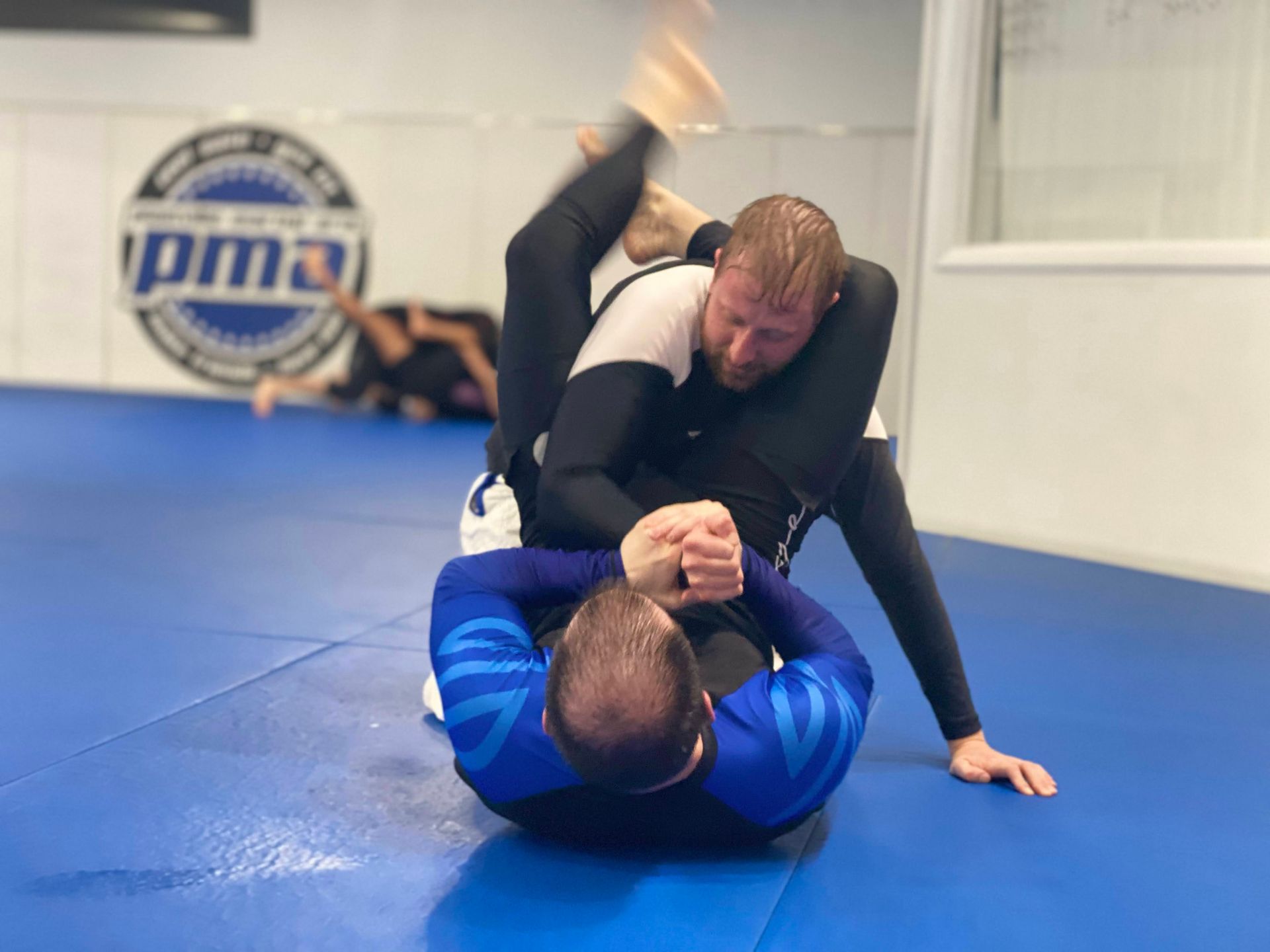
You will also learn something that surprises many first-timers: being a good partner is a skill. Holding pads correctly, giving realistic but safe reactions, and communicating clearly are all part of training.
Fitness Benefits You Will Notice (Without Turning Class Into a Bootcamp)
Many students come to martial arts for self-defense and end up staying because the fitness benefits feel different from regular workouts. Training is engaging. You are solving movement problems, learning coordination, and building confidence while you sweat.
Over time, you can expect improvements in:
- cardiovascular endurance from repeated rounds and drills
- core strength from rotating strikes and stable stances
- mobility from kicks, footwork, and warm-up patterns
- coordination and reaction time as timing becomes sharper
And yes, you will probably feel muscles you forgot you had. That first-week soreness is real, but it is usually a good sign that your body is adapting.
Adult Training: How We Support Busy Schedules and Realistic Goals
We work with many people looking for adult martial arts in Plainville who are juggling work, family, and everything else. That means training has to be practical and sustainable, not an all-or-nothing lifestyle change.
In adult classes, we keep instruction clear and layered. You can do the same drill as someone more experienced, but with a version that fits your current level. That way you can train alongside higher ranks without feeling behind.
We also focus on goals that matter to adults:
- practical self-defense habits, including awareness and positioning
- stress relief through structured movement and skill-building
- confidence that comes from measurable progress
- fitness that is actually interesting enough to repeat weekly
Consistency wins here. Two classes per week done steadily will outperform a short burst of intense training that burns you out.
Common Beginner Concerns (and What Actually Happens)
If you are nervous, you are not alone. Here are a few concerns we hear often, along with the reality we see every day.
“I am not in shape yet”
You do not need to get in shape to start martial arts. Training is how you get there. We scale intensity, give options, and help you build capacity over time.
“I do not want to look clueless”
Everyone looks new at first. The difference is that beginners improve fast, because every coaching tip makes a noticeable change. Your first class is not about being good. It is about getting started.
“I am worried about getting hurt”
Safety is built into how we teach. You will learn control before power. You will learn position before speed. And you will always be encouraged to speak up if something does not feel right.
“I do not have time”
We help you find a schedule that works, and we keep classes structured so your time on the mat is productive. You do not need to train every day to make progress.
What Happens After Class: Next Steps and How Progress Works
After your first class, we usually check in with you briefly. We want to know how it felt, what you enjoyed, what felt confusing, and what your goals are. This is also when we can point you to the program options that fit your age, experience level, and schedule.
Progress in martial arts is not mysterious. It is a series of small improvements that stack:
- cleaner technique
- better balance and posture
- calmer breathing under pressure
- sharper timing and distance
- more confidence using skills with control
The first big milestone is simply feeling comfortable walking in the door. That is when training becomes part of your routine, not a one-time challenge.
How to Get the Most Out of Your First Month
Your first month sets the tone. If you show up consistently and stay open to coaching, you will feel real change quickly. Here is what we recommend for a strong start:
1. Train consistently on a schedule you can maintain, even if it is just twice a week
2. Focus on fundamentals instead of trying to collect a lot of techniques
3. Ask questions when you are unsure, because that is how we coach better
4. Take notes mentally after class about one thing you improved
5. Prioritize recovery with sleep, hydration, and light movement between sessions
This approach keeps training enjoyable and sustainable, which is what makes results last.
Ready to Begin
Building confidence in martial arts does not come from doing everything perfectly. It comes from showing up, learning the basics the right way, and training in a supportive environment where structure makes progress feel natural. That is what we aim to create every day.
When you are ready to take that first step, we will guide you through a first class that feels clear, safe, and genuinely useful. At Plainville Martial Arts, we keep the experience beginner-friendly while still treating your goals seriously, whether you are looking for adult martial arts in Plainville or a program for the whole family.
Take what you learned here to the mat by joining a martial arts class at Plainville Martial Arts.
